
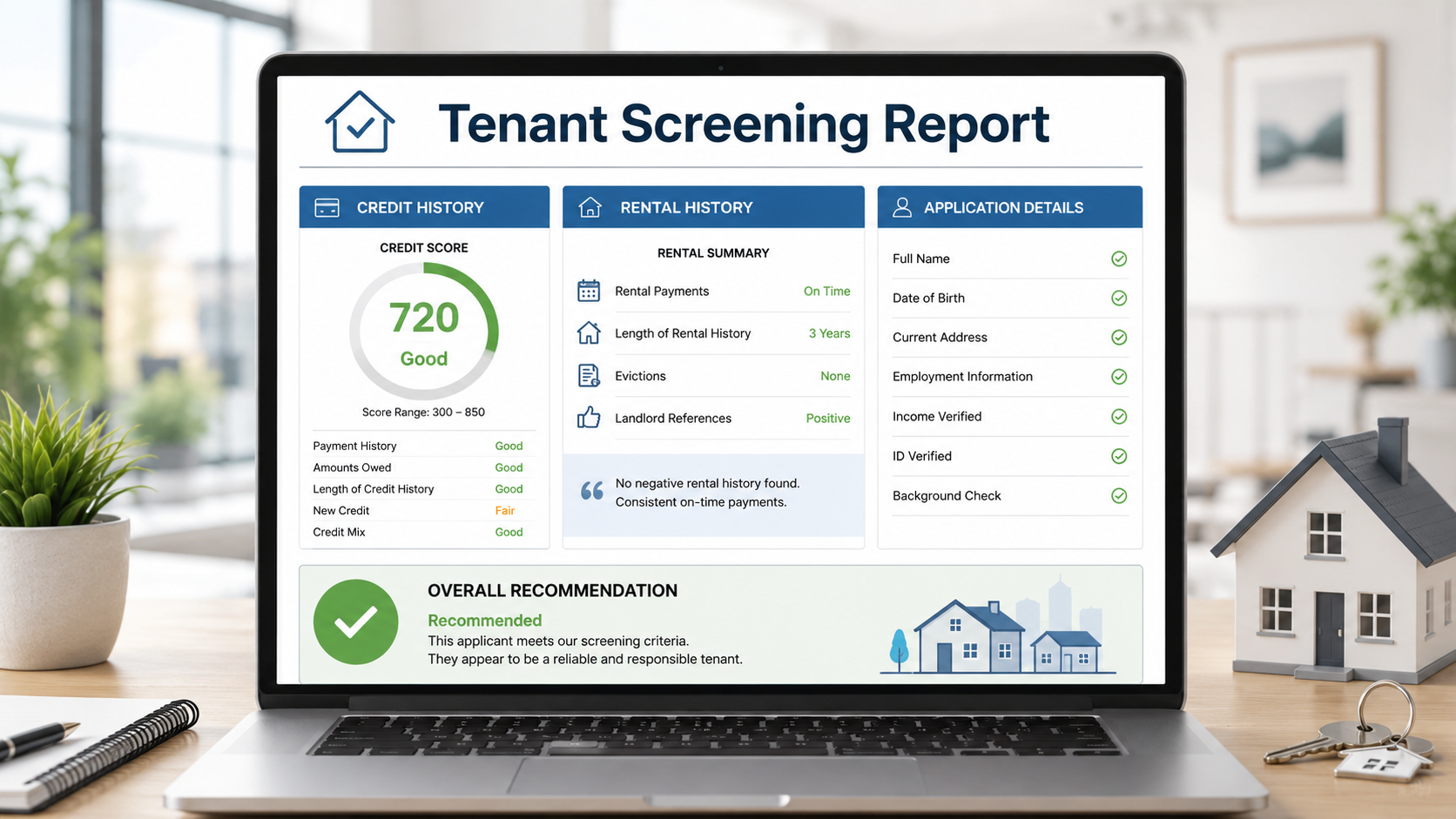
When you apply for an apartment, the landlord may not be looking at just one thing. Your credit score might matter, but it’s often only part of the picture.
Many landlords and property managers use tenant screening reports, also called rental background checks, to help decide whether to approve an applicant. These reports can include credit information, rental history, eviction-related records, criminal background information, income details, and sometimes a score or recommendation from the screening company.
That can feel intimidating, especially if you’ve been denied before and never really understood why. But the more you know about what can show up, the easier it is to prepare, spot mistakes, and ask better questions before you pay another application fee.
Tenant Screening Is More Than a Credit Check
A tenant screening report is not always the same thing as a regular credit report.
A credit report usually focuses on your credit accounts, payment history, balances, collections, and other credit-related information. A tenant screening report may pull in credit information, but it can also include rental records, housing court records, background check details, and information gathered from other sources. The FTC explains that tenant background checks may include rental and eviction history, credit history, criminal records, and even risk scores or recommendations from a screening company.
In plain English: a landlord may not just be asking, “What’s this person’s credit score?”
They may also be asking:
- Has this person paid rent reliably before?
- Is there unpaid rent or rental debt?
- Are there eviction filings or housing court records?
- Does the applicant’s income seem strong enough for the rent?
- Does the applicant’s identity and address history match?
- Did the screening company flag anything as risky?
That’s why someone can be denied even if their credit score wasn’t the only issue. It’s also why someone with imperfect credit may still have a chance if the rest of their application looks strong.
Common Information That May Show Up
Every screening company is different, and landlords don’t all request the same type of report. But tenant screening reports may include several categories of information.
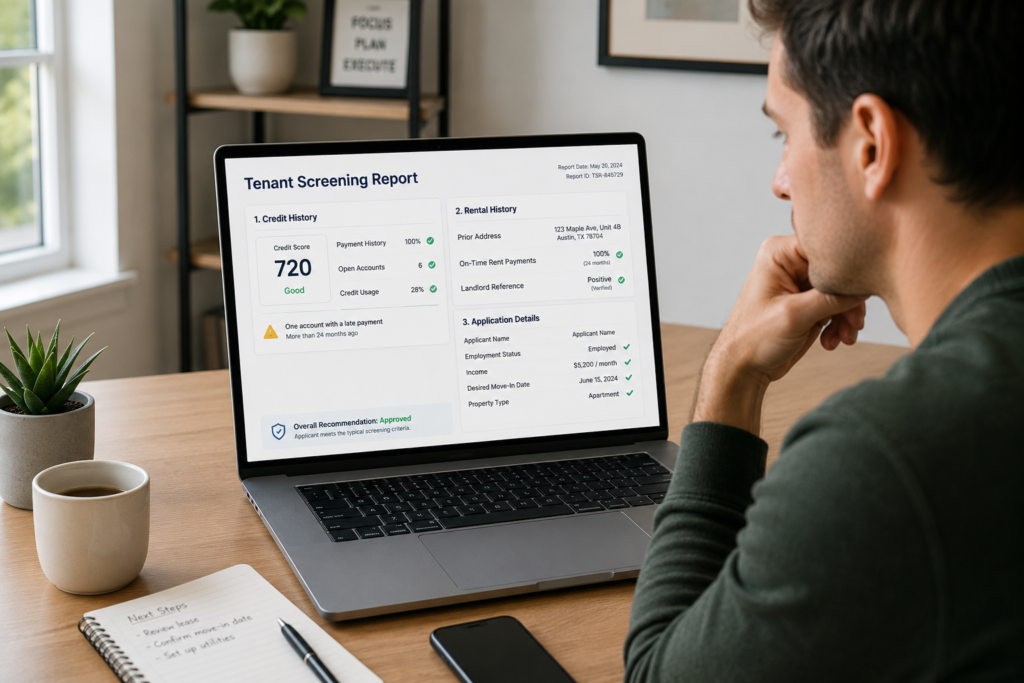
Common items can include:
- Your full name, date of birth, Social Security number, and current or past addresses
- Work and income history
- Credit account status and payment history
- Collections or unpaid debts
- Missed rent or other rent-related payments
- Housing court records, including eviction-related records
- Criminal records, including arrest, charge, or conviction records
- Bankruptcy information
- Lawsuits, whether or not they’re related to housing
- A tenant risk score or approval recommendation
The FTC says a tenant background check company may also create and share a recommendation or score that claims to predict what kind of tenant you’ll be, such as whether you’ll pay rent or damage the property. You may not see that same score in the version of the report you receive.
That last part matters. Sometimes renters think, “I looked at my report and I still don’t understand why I was denied.” The decision may have been influenced by a score, recommendation, landlord policy, income requirement, or combination of factors.
What Can Hurt a Rental Application?
A tenant screening report can hurt your application when it makes you look riskier to the landlord. Sometimes that risk is real. Other times, the report may be missing context or showing something incorrectly.
Possible red flags include:
- Recent missed payments
- Unpaid collections
- Prior rental debt
- Eviction filings or judgments
- A dismissed eviction that still appears incomplete
- Accounts that look unpaid even though they were resolved
- Income that doesn’t meet the landlord’s requirement
- A criminal record that triggers the landlord’s screening policy
- A mismatch in your name, address, or identity details
- A risk score or recommendation that labels you as a higher-risk applicant
Eviction-related records can be especially frustrating. A report may show that a case was filed but fail to show that it was dismissed, settled, sealed, or resolved. The CFPB specifically recommends checking whether eviction information includes the final status of the case and whether a single eviction is appearing multiple times as if it were separate events.
It’s also important to know that old information may have limits. Under the Fair Credit Reporting Act, tenant background check companies generally can’t report most negative information after seven years, including most civil lawsuits, judgments, housing court cases, and arrest records. Bankruptcies can generally be reported for 10 years, while criminal convictions don’t have the same federal time limit. Local laws may give renters additional protections.
Tenant Screening Reports Can Have Mistakes
Tenant screening reports aren’t perfect. And when they’re wrong, the consequences can be serious.
The CFPB says it has received thousands of complaints about rental background check companies and has heard from people rejected from housing because incorrect information appeared in their reports.
Common tenant screening report errors may include:
- Information that belongs to someone else
- A mixed file because of a similar name
- Wrong or outdated addresses
- Duplicate records
- Eviction records without the final outcome
- Criminal or eviction records that were sealed or expunged
- Debts that were already paid
- Accounts that don’t belong to you
- Negative information that’s too old to be reported
This is one reason it’s worth slowing down after a denial. If you immediately apply somewhere else without checking the report, the same issue may follow you to the next application.
What Happens If You’re Denied Because of a Tenant Screening Report?
If a landlord denies your rental application because of information in a tenant screening report, federal law requires the landlord to tell you. This is called an adverse action notice. It can be given in writing, electronically, or orally.
An adverse action is not just a flat denial. It can also include:
- Requiring a co-signer
- Charging a higher rent amount
- Requiring a larger deposit
- Requiring a deposit that another applicant wouldn’t have to pay
The notice should give you the name, address, and phone number of the company that provided the report. It should also explain your right to request a free copy of the report within 60 days and your right to dispute inaccurate information.
If the landlord only tells you verbally, ask for the information in writing so you have a record.
What To Do If Your Report Is Wrong
If you find something inaccurate or outdated, don’t just ignore it. Dispute it with the tenant screening company or credit reporting company that provided the information.
Start by gathering documents that support your side. That may include:
- Court records showing a case was dismissed
- Proof that an account was paid
- Letters from a previous landlord
- Receipts or payment confirmations
- Identity documents
- A lease, move-out statement, or settlement agreement
- Written proof that a record was sealed or expunged
Then send a clear dispute explaining what’s wrong and include copies of your supporting documents. The CFPB says tenant screening or credit reporting companies generally have 30 days to investigate disputes, though in some cases they may have 45 days, and some states have shorter deadlines.
It can also help to let the landlord know you’ve disputed the report, especially if the error is obvious or you have strong documentation.
How To Prepare Before Your Next Application
You may not be able to control everything a landlord looks at, but you can make your application easier to understand.
Before applying, try to:
- Ask what screening criteria the landlord uses
- Check your credit reports for errors
- Gather proof of income
- Get rental references, if available
- Keep proof of on-time rent payments
- Review housing court records if you’ve had a prior case
- Save copies of application receipts and denial notices
- Ask for the screening company’s information if you’re denied
The FTC recommends asking what information a landlord uses to decide whether to rent to you before paying an application or background check fee. That one question can save you time, money, and frustration.
You can ask something simple like:
“Before I apply, do you have specific credit, income, eviction, or background screening requirements I should know about?”
That doesn’t guarantee approval, but it helps you avoid applying blindly.
What Shows Up on a Tenant Screen Report – the Bottom Line:
A tenant screening report can show more than your credit score. It may include credit history, rental history, missed rent, housing court records, criminal background information, bankruptcy records, identity details, income history, and even a screening score or recommendation.
That sounds like a lot, but here’s the good news: you have the right to know when a report affects your application, request a copy, and dispute information that’s wrong or outdated.
If you’ve been denied, charged more, asked for a larger deposit, or told you need a co-signer, don’t panic. Ask what report was used. Review it carefully. Look for errors. Gather documents. Then take the next step with better information.
Renters.help is built for people trying to understand what may be getting in the way of their rental applications, especially when credit reports, tenant screening reports, or denials get confusing.
Not sure what’s showing up on your tenant screening report? Renters.help can help you understand what to check before your next rental application.