
Bad credit and no credit can both make apartment hunting feel harder than it should.
If you have bad credit, you may worry that landlords will see missed payments, collections, or old debt and assume you’re too risky. If you have no credit, you may worry that landlords won’t have enough information to approve you at all.
So which is worse for renting: bad credit or no credit?
The honest answer is: bad credit is usually harder to explain, but no credit can still make approval more difficult.
Bad credit may show a landlord that something went wrong in the past. No credit may show that there isn’t enough history to judge how you handle financial responsibilities. Both can create uncertainty, but they create different kinds of uncertainty.
The good news is that neither one automatically means you can’t rent. You may just need to prepare your application differently.
What Does Bad Credit Mean?
Bad credit usually means your credit report shows negative information or a lower credit score.
That may include:
- Late payments
- Collections
- Charge-offs
- High credit card balances
- Accounts currently past due
- Bankruptcy
- Foreclosure
- Repossession
- Rental debt
- Utility collections
- Too many recent credit applications
A landlord may see bad credit as a sign that you’ve had trouble paying bills in the past. That doesn’t mean you’re a bad tenant. It means the landlord may want more proof that your current situation is stable.
Bad credit can happen for a lot of reasons:
- Job loss
- Medical bills
- Divorce or separation
- Reduced hours
- Family emergency
- Identity theft
- Business failure
- A period of financial hardship
- Lack of financial guidance when you were younger
But a landlord may not know the story behind the score. They may only see the report, the tenant screening results, or a recommendation from the screening company.
That’s why bad credit often needs context.
What Does No Credit Mean?
No credit usually means you don’t have enough credit history for a strong credit profile or score. It doesn’t necessarily mean you’ve done anything wrong.
You may have no credit because:
- You’re renting your first apartment.
- You’re young and just starting out.
- You’ve never had a credit card or loan.
- You’ve mostly used cash or debit cards.
- You’re new to the U.S.
- You recently separated or divorced and had little credit in your own name.
- You haven’t used credit in several years.
- Your accounts don’t report to the major credit bureaus.
No credit can be frustrating because it may feel like you’re being penalized for avoiding debt.
A landlord may think, “This applicant doesn’t have a history of missed payments, but I also don’t have much information to review.”
That’s different from bad credit. With no credit, the problem is usually a lack of proof, not a history of negative information.
Which Is Worse for Renting?
In many cases, bad credit is harder than no credit.
Why? Because bad credit may show specific problems that concern a landlord, such as unpaid collections, recent missed payments, rental debt, or accounts that are currently past due.
No credit can still be a challenge, but it may be easier to explain. A first-time renter with no credit, steady income, savings, and a co-signer may look less risky than someone with recent unpaid rent or several active collections.
But it depends on the details.
Bad credit may be less concerning if:
- The negative items are old.
- The debts are paid or settled.
- The issue was caused by a temporary hardship.
- Your income is stable now.
- You have strong rental references.
- You have proof of on-time rent payments.
- You can explain the situation briefly.
- The landlord reviews applications case by case.
No credit may be more concerning if:
- You also have no rental history.
- Your income is hard to verify.
- You don’t have savings.
- You don’t have references.
- You’re applying for rent that stretches your budget.
- The landlord has strict screening rules.
- You don’t have a co-signer and the landlord requires one.
So the better question isn’t only “Which is worse?”
The better question is:
Which parts of my application can I strengthen before I apply?
How Landlords May View Bad Credit
Landlords usually aren’t just looking at your score for fun. They’re trying to decide whether you’re likely to pay rent on time.
If your credit report shows missed payments or collections, a landlord may worry that rent could become another unpaid bill.
Some credit issues may raise more concern than others.
A landlord may pay close attention to:
- Recent missed payments
- Accounts currently past due
- Unpaid collections
- Rental debt
- Utility collections
- Bankruptcy
- Charge-offs
- A pattern of late payments
- High debt compared with income
Rental debt can be especially serious because it’s directly connected to housing. If you owe money to a previous landlord or apartment complex, a new landlord may see that as more relevant than an old credit card account.
That doesn’t mean bad credit is impossible to overcome. But it does mean you should be ready with documents that show what’s changed.
How Landlords May View No Credit
No credit may make a landlord hesitate because there’s less information to review.
A landlord may wonder:
- Does this person pay bills on time?
- Have they handled monthly financial obligations before?
- Can they afford rent?
- Do they have steady income?
- Do they have rental references?
- Will they need a co-signer?
If you have no credit, the landlord may rely more heavily on income, employment, savings, rental history, and references.
That can work in your favor if those parts of your application are strong.
For example, if you don’t have credit but you have steady income, enough savings for move-in costs, and a strong reference from a previous landlord, your application may still be solid.
If you don’t have credit or rental history, you may need extra support, such as a co-signer, proof of savings, or a lower-rent apartment that fits your income more comfortably.
Tenant Screening Reports Can Matter Too
Credit isn’t always the only report involved.
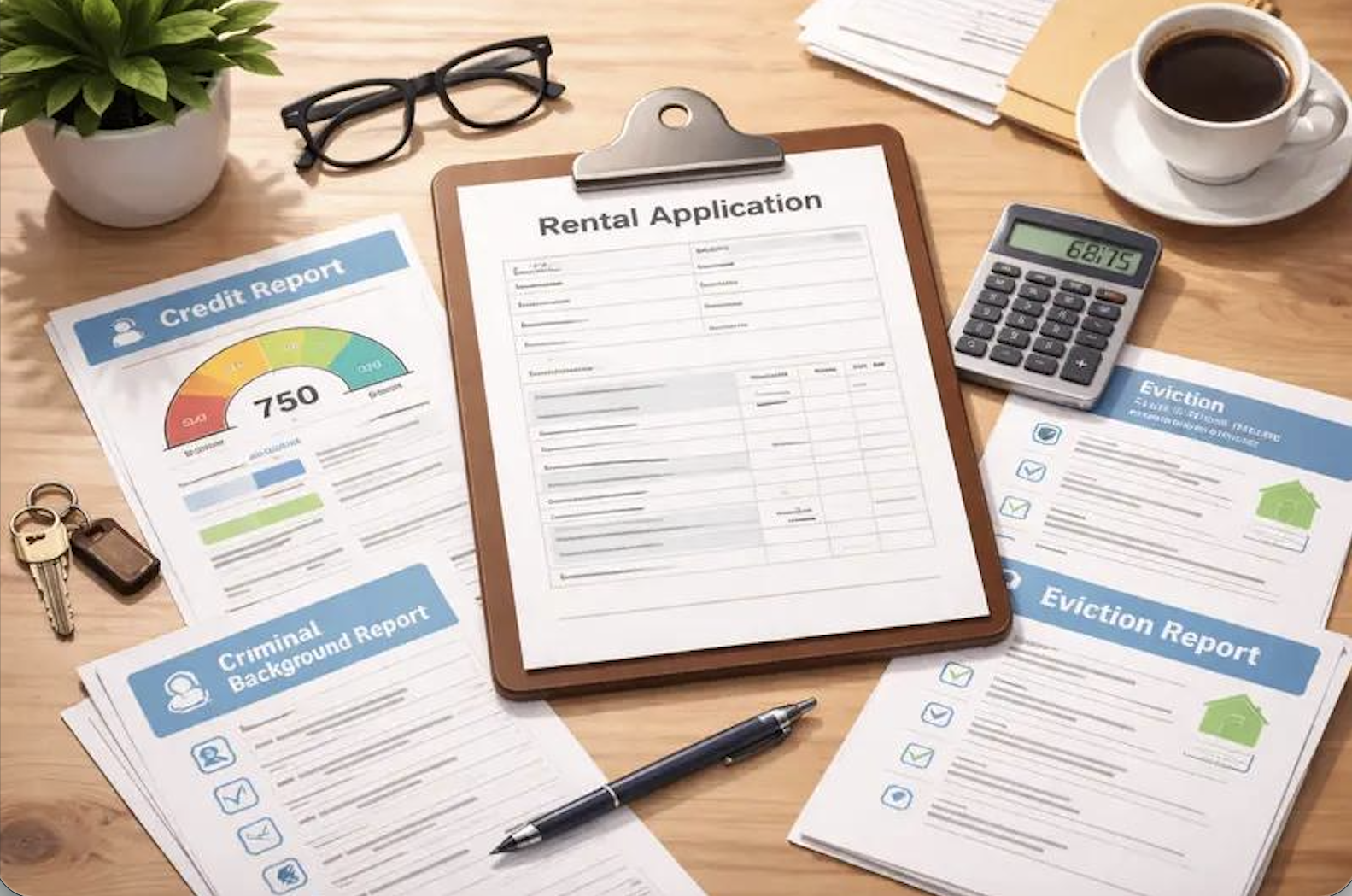
Many landlords use tenant screening reports. These reports may include credit information, but they can also include rental history, eviction-related records, housing court records, criminal background information, income details, missed rent, bankruptcy, and sometimes a tenant score or recommendation.
That means a renter with bad credit or no credit may still be affected by other information.
For example:
- Someone with no credit may still have a clean tenant screening report and strong income.
- Someone with bad credit may still have great rental history and no eviction records.
- Someone with decent credit may still be denied because of rental debt or a tenant screening error.
- Someone with no credit may be denied because there isn’t enough income documentation.
This is why it’s risky to focus only on credit score.
Your rental application is usually a bigger picture.
If You Have Bad Credit, Do This Before Applying
If your credit is damaged, preparation matters.
Start by checking your credit reports. Look for inaccurate, outdated, duplicated, or incomplete information. If something is wrong, dispute it before it causes another denial.
Then gather documents that show your current situation is stronger than your past credit problems suggest.
Helpful documents may include:
- Recent pay stubs
- Employment verification
- Proof of savings
- Proof of on-time rent payments
- Rental references
- Paid-in-full or settlement letters
- Dispute confirmations
- A short credit explanation letter
- Co-signer or guarantor information, if available
You can also ask landlords about screening rules before paying an application fee.
Ask:
- “Do you have a minimum credit score?”
- “Do you review applications case by case?”
- “Do you consider applicants with bad credit if income and rental history are strong?”
- “Do you treat rental debt differently from other collections?”
- “Would a co-signer help?”
- “Are there any automatic denial factors I should know about?”
If the landlord has strict rules and your application doesn’t fit, you may decide not to spend money applying there.
If You Have No Credit, Do This Before Applying
If you don’t have credit history, focus on proving stability in other ways.
You may want to gather:
- Proof of income
- Job offer letter
- Employment verification
- Bank statements, if you’re comfortable sharing them
- Proof of savings
- Rental references
- Utility payment history
- Phone payment history
- Proof of on-time rent payments
- Co-signer or guarantor information, if needed
You can also include a short note:
“I don’t have much credit history yet because I haven’t used credit cards or loans. I do have steady income, savings for move-in costs, and references available.”
That’s simple, honest, and helpful.
You may also want to ask:
- “Do you work with applicants who don’t have much credit history?”
- “Can I provide proof of income and savings instead?”
- “Would a co-signer help?”
- “Do you review applications manually or use automatic screening rules?”
No credit may require more documentation, but it can often be explained without sounding like a major red flag.
Should You Explain Bad Credit or No Credit to a Landlord?

Sometimes, yes.
If the issue is likely to affect approval, it may help to bring it up briefly and calmly.
For bad credit, you might say:
“My credit was affected by a temporary hardship, but my income is stable now and I can provide proof of income, rental references, and documentation showing old debts were resolved.”
For no credit, you might say:
“I don’t have much credit history yet, but I have steady income and savings. I can provide proof of employment, bank statements, and references.”
The goal isn’t to overshare. It’s to give context.
Avoid long explanations, emotional details, or promises you can’t prove. Landlords usually want to see stability, not a life story.
Is a Co-Signer More Helpful for Bad Credit or No Credit?
A co-signer can help in either situation, but it may be especially helpful for no-credit renters or renters with limited income.
A co-signer may help if:
- You have no credit but steady income.
- You’re a first-time renter.
- You’re a student.
- You recently started a new job.
- Your income is close to the requirement.
- Your credit is weak, but the landlord allows co-signers.
- The rest of your application is strong.
A co-signer may not help as much if:
- The landlord has automatic denial rules.
- You have recent unpaid rental debt.
- You have an active eviction-related issue.
- Your income doesn’t support the rent.
- The co-signer doesn’t meet the landlord’s requirements.
Before asking someone to co-sign, ask the landlord whether it would actually help. A co-signer may be responsible if you don’t pay rent, so don’t treat it like a quick favor.
Which Situation Is Easier to Fix?
No credit may be easier to start building from because there may not be negative information to repair. You may need to open and manage credit carefully, but you may not have old missed payments or collections pulling you down.
Bad credit may take longer because negative information can remain on credit reports for years if it’s accurate. That doesn’t mean nothing can improve. You may still be able to dispute errors, pay current bills on time, lower balances, resolve accounts, and rebuild over time.
For renting, though, you may not have years to wait.
That’s why the short-term focus should be rental approval preparation:
- Choose apartments that fit your income.
- Ask about screening rules before applying.
- Gather strong documents.
- Explain issues briefly.
- Fix report errors.
- Apply strategically.
Credit improvement is the long game. Getting approved for safe housing may be the immediate goal.
What If You’re Denied?
If you’re denied because of information in a credit report or tenant screening report, ask for the adverse action notice.
That notice should tell you which company provided the report, how to request a free copy, and how to dispute inaccurate information.
After a denial:
- Request the report.
- Review it carefully.
- Look for errors.
- Check whether the information belongs to you.
- Check whether old items are still allowed to appear.
- Check whether paid items are updated.
- Check whether eviction records show the final outcome.
- Dispute inaccurate information.
- Save copies of everything.
Don’t just keep applying blindly. If the same report issue keeps showing up, it may keep hurting your applications.
Quick Comparison: Bad Credit vs. No Credit
Here’s the simple version.
Bad credit may mean:
- Negative information is already showing.
- The landlord may see missed payments or collections.
- Rental debt may be a bigger concern.
- You may need to explain what happened.
- You may need proof that things have changed.
- Approval may be harder if issues are recent or unresolved.
No credit may mean:
- There isn’t much credit history to review.
- The landlord may need other proof of reliability.
- Income and savings matter more.
- References can help.
- A co-signer may be useful.
- Approval may be easier if the rest of the application is strong.
Neither situation is hopeless. They just require different strategies.
Quick Checklist Before You Apply
If you have bad credit or no credit, do this before applying:
- Check your credit reports.
- Ask about screening criteria.
- Ask whether there’s a minimum credit score.
- Ask whether applications are reviewed case by case.
- Gather proof of income.
- Gather proof of savings.
- Get rental references.
- Keep proof of on-time rent payments.
- Prepare a short explanation, if needed.
- Document paid or disputed debts.
- Ask whether a co-signer would help.
- Apply for apartments that fit your income.
- Keep copies of applications, fees, reports, and denials.
The more prepared you are, the less your application depends on one score or one missing credit history.
The Bottom Line
Bad credit and no credit can both make renting harder, but they’re not the same.
Bad credit is usually more difficult because it may show missed payments, collections, rental debt, or other negative information. No credit can still be a challenge, but it may be easier to explain if you have strong income, savings, references, or a co-signer.
Either way, the goal is to help the landlord see the full picture.
Check your reports. Ask about screening rules. Gather documents. Apply for apartments that fit your income. And don’t assume one credit issue tells the whole story.
Renters.help is built for people trying to understand what may be getting in the way of rental approval, especially when bad credit, no credit, tenant screening reports, or denials get confusing.
Not sure whether bad credit or no credit is hurting your rental application? Renters.help can help you understand what landlords may be looking at before you apply.