

Finding a rental that works for you is hard enough. Finding one that also works for your pet can feel even harder.
Maybe you found a place that checks every box. The rent fits your budget. The location works. The photos look good. You can picture yourself living there.
Then the landlord says: “Sorry, no pets.”
If your dog, cat, or other animal is part of your family, that answer can feel personal. But in many cases, landlords are allowed to set pet rules for their rental property. That may include saying no pets, limiting the number of pets, restricting certain breeds or sizes, or charging pet-related fees where allowed.
That said, pets and assistance animals are not always treated the same way. If you have a disability-related need for a service animal or assistance animal, different rules may apply.
So, can you be denied because of your pets?
The answer is: yes, sometimes– but there are important exceptions.
Can a Landlord Say No to Pets?
In many rentals, yes. A landlord can often decide whether ordinary pets are allowed on the property.
A pet policy may say:
- No pets allowed
- Cats only
- Dogs under a certain weight
- One pet maximum
- No certain breeds
- No exotic animals
- Pets allowed with approval
- Pets allowed with a deposit or monthly pet rent
- Pets allowed only with a written pet addendum
This can be frustrating, especially if your pet is well-trained, quiet, and clean. But landlords may worry about property damage, noise, odors, allergies, insurance issues, liability, or future tenant concerns.
A landlord may also be limited by rules outside their own preference, such as:
- HOA rules
- Condo association rules
- Insurance restrictions
- Local ordinances
- Breed or animal limits
- Multi-unit property rules
- Lease or community policies
That’s why it’s important to ask about pets before applying, paying a fee, or signing a lease.
“Pet-Friendly” Doesn’t Always Mean Your Pet Is Approved
A listing may say “pet-friendly,” but that doesn’t always mean every pet is allowed.
Some renters assume that if a property allows pets, their animal is automatically fine. That can lead to problems later.
A pet-friendly rental may still have rules about:
- Type of animal
- Number of pets
- Dog breed
- Weight limit
- Age of pet
- Vaccination records
- Spay or neuter status
- Pet interview
- Pet screening profile
- Pet deposit
- Monthly pet rent
- Pet liability insurance
- Waste cleanup rules
- Noise complaints
- Yard damage
- Lease violations related to pets
Before you apply, ask for the full pet policy in writing.
A better question than “Do you allow pets?” is:
“Can you confirm whether my specific pet is allowed under your written pet policy?”
Then share the basics: animal type, breed, weight, age, and number of pets.
Why Landlords Deny Pets
Landlords may deny pets for several reasons.
Common concerns include:
- Scratched floors
- Damaged carpet
- Chewed trim or doors
- Pet odors
- Fleas or pests
- Noise complaints
- Aggressive behavior
- Yard damage
- Allergies for future tenants
- Insurance restrictions
- Liability if someone is bitten or injured
- HOA or building rules
Some landlords have had bad experiences with pets in the past. Others may simply not want the extra risk. Some may be open to pets but only under certain conditions.
That doesn’t mean your pet is the problem. It means the landlord is setting rules for the property.
The best thing you can do is get clear answers before you spend money on the application.
Can You Be Denied After You Already Disclosed Your Pet?
If you tell the landlord about your pet and the landlord says the pet isn’t allowed, they may deny the application under their pet policy.
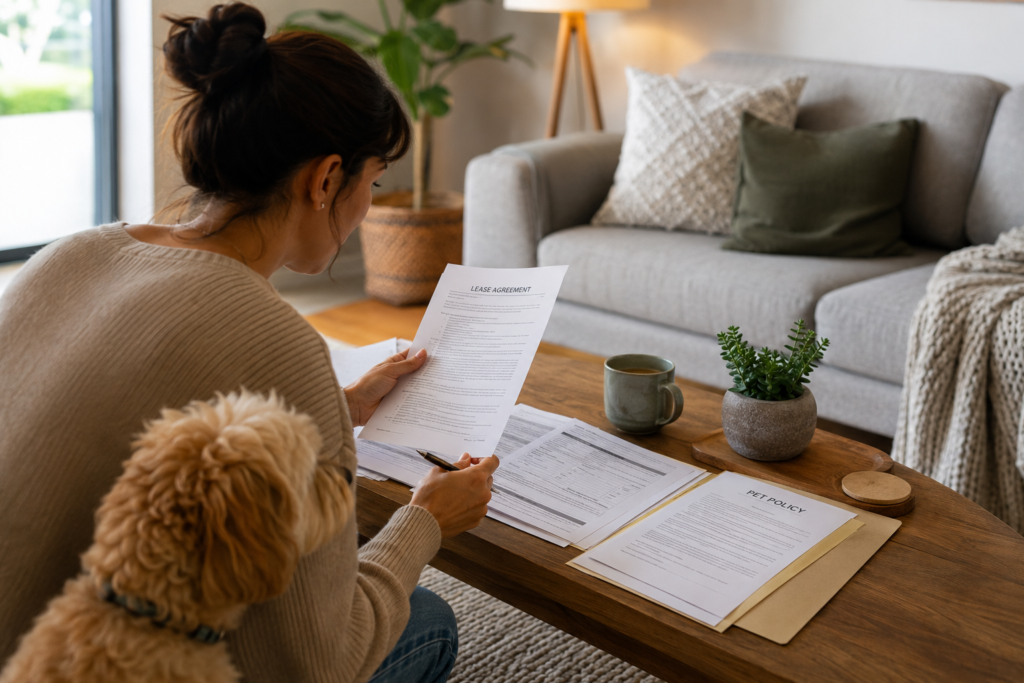
That may happen if:
- The property has a no-pet policy.
- Your pet exceeds the weight limit.
- Your dog is on the restricted breed list.
- You have more pets than allowed.
- The HOA doesn’t allow your animal.
- The landlord’s insurance policy creates restrictions.
- You don’t agree to the pet deposit, fee, or pet rent.
- The landlord doesn’t approve the pet after screening.
This is one reason to ask early.
You don’t want to pay an application fee, submit documents, and get emotionally attached to the property only to learn that your pet was never going to be approved.
Can a Landlord Change Their Mind After Approving Your Pet?
This depends on what was agreed to and what’s in writing.
If the landlord approved your pet in the lease or a pet addendum, they may not be able to simply pretend that approval never happened. But the details matter.
Review:
- The lease
- Pet addendum
- Community rules
- HOA rules
- Any written pet approval
- Any emails or texts confirming approval
- Rules about pet behavior or lease violations
- Rules about revoking pet permission
- Local landlord-tenant laws
A landlord may have stronger grounds to take action if the pet violates the lease. For example, repeated noise complaints, damage, waste issues, unauthorized additional animals, or aggressive behavior may create problems even if pets are generally allowed.
If your pet was approved in writing and the landlord later tries to remove permission without a clear reason, consider getting local legal or tenant-rights guidance before assuming you have no options.
The written agreement matters.
Service Animals and Assistance Animals Are Different
Service animals and assistance animals are not the same as ordinary pets.
In housing, a person with a disability may request a reasonable accommodation to keep an assistance animal, even if the property has a no-pet policy or pet restrictions.
This is an important distinction.
A landlord may be allowed to say “no pets.” But they may not be able to apply that same rule the same way when the animal is needed because of a disability.
Depending on the situation, an assistance animal may help a person with a disability by performing tasks, providing support, or helping with disability-related symptoms. These requests are usually handled under fair housing rules, not ordinary pet policies.
That means a landlord should be careful before denying an assistance-animal request, charging pet fees, or applying pet restrictions without reviewing the accommodation request properly.
Be Careful With Online “ESA Certification”
If you believe you need an assistance animal because of a disability, be careful with websites that sell instant certificates, registrations, badges, or ID cards.
A quick online certificate doesn’t automatically make an ordinary pet into an assistance animal for housing purposes. Housing providers may be allowed to request reliable documentation when the disability or disability-related need isn’t obvious.
A better path is to speak with a qualified healthcare or mental health professional who understands your situation.
If you’re unsure what documentation is appropriate, consider contacting:
- A local fair housing organization
- Legal aid
- A housing counselor
- A disability rights organization
- A qualified healthcare provider
- A tenant-rights group in your area
The goal isn’t to “get around” a pet policy. The goal is to make a legitimate accommodation request if you have a disability-related need.
Can a Landlord Charge Pet Fees for an Assistance Animal?
Ordinary pet fees and assistance animals may be treated differently.
If an animal is approved as a reasonable accommodation because of a disability, it generally should not be treated like a regular pet for pet fees, pet rent, or pet restrictions.
That said, tenants are still usually responsible for damage caused by an animal, whether the animal is a pet or an assistance animal.
If a landlord tries to charge pet rent or a pet deposit for an assistance animal, it may be worth getting current fair housing guidance before paying.
This area can be sensitive, and state or local rules may add protections. When in doubt, get qualified help.
What If Your Pet Is Not an Assistance Animal?
If your pet is not a service animal or assistance animal, then the landlord’s ordinary pet policy may apply.
That means the landlord may be able to:
- Deny pets
- Limit pet types
- Set weight limits
- Set breed restrictions
- Require pet deposits
- Charge monthly pet rent
- Require pet screening
- Require vaccination records
- Limit the number of animals
- Enforce lease rules about noise, damage, and waste
Rules about deposits, fees, and pet rent can vary by location, so it’s worth checking local laws before assuming every charge is allowed.
But in general, if the animal is an ordinary pet, you usually need the landlord’s permission.
What to Ask Before Applying With a Pet
Before you pay an application fee, ask about the pet policy.
You can ask:
- “Are pets allowed?”
- “Is my pet’s breed allowed?”
- “Is there a weight limit?”
- “How many pets are allowed?”
- “Is there a pet deposit?”
- “Is the pet deposit refundable?”
- “Is there monthly pet rent?”
- “Is there a nonrefundable pet fee?”
- “Do you require vaccination records?”
- “Do you require pet screening?”
- “Do you require renter’s insurance?”
- “Are there HOA or building pet rules?”
- “Can I get the pet policy in writing before applying?”
If the answer is unclear, slow down.
Pet rules should be clear before you apply, not after you’ve paid a fee or signed a lease.
What Documents Can Help If You Have a Pet?
If the landlord is open to pets but cautious, a pet profile may help.
You may want to provide:
- Pet photo
- Breed and weight
- Age
- Vaccination records
- Spay or neuter status, if relevant
- Training history
- Pet reference from a past landlord
- Proof of renter’s insurance, if required
- Short note about behavior
- Proof of licensing, if required locally
A simple pet introduction can make the conversation easier.
For example:
“I have one dog, about 35 pounds, fully vaccinated, house-trained, and previously approved by my current landlord. I can provide vaccination records and a landlord reference if needed.”
That sounds prepared and responsible.
Can You Negotiate a Pet Policy?
Sometimes.
If the landlord is unsure, you may be able to offer reasonable protections.
You could ask whether they’d consider:
- A refundable pet deposit
- Monthly pet rent, if allowed
- A written pet addendum
- Professional cleaning at move-out
- Renter’s insurance with pet liability coverage
- Pet references
- A trial period, if the landlord allows it
- Agreement to repair pet damage
- Limiting approval to one specific pet
But not every landlord will negotiate. If the no-pet rule comes from insurance, HOA rules, or local restrictions, the landlord may not have much flexibility.
If the landlord agrees to make an exception, get it in writing.
Verbal permission is not enough.
What If You’re Denied Because of Your Pet?
If your pet is an ordinary pet and the landlord has a no-pet policy or your pet doesn’t meet the policy, you may need to keep looking.
That’s frustrating, but it’s better than hiding the pet and risking a lease violation later.
If you believe the animal is a service animal or assistance animal connected to a disability, the situation is different. You may want to make a reasonable accommodation request and provide appropriate documentation when needed.
If you believe you were denied unfairly because of a disability-related assistance animal request, consider reaching out to a local fair housing organization, legal aid office, housing agency, or disability rights group.
Keep records of:
- The listing
- The application
- The pet policy
- Your accommodation request, if any
- Emails and texts
- Any denial message
- Fees paid
- Lease documents
- Notes from phone calls
Documentation can help if you need advice later.
What If You Already Signed the Lease?
If you already signed a lease, read the pet section carefully.
Look for:
- Whether pets are allowed
- Whether your specific pet was approved
- Whether approval must be written
- Any pet addendum
- Pet deposit or fee terms
- Rules about damage
- Rules about noise
- Rules about waste cleanup
- Insurance requirements
- Whether permission can be revoked
- What counts as a lease violation
If the lease says no pets and your pet wasn’t approved in writing, you may have a problem.
If the lease allows your pet and the landlord later says otherwise, gather your documents and get local guidance before taking action.
If your animal is an assistance animal, ordinary lease pet rules may not tell the whole story. You may need to follow the reasonable accommodation process.
Don’t Hide a Pet From a Landlord
Hiding a pet may feel tempting if you keep getting denied, but it can create bigger problems.
If the landlord discovers an unauthorized pet, you could face:
- Lease violation notice
- Pet fees or penalties
- Requirement to remove the pet
- Loss of pet approval
- Conflict with the landlord
- Possible nonrenewal
- Possible eviction process, depending on the situation and local law
It can also damage trust.
It’s better to ask upfront, search for pet-friendly rentals, prepare a pet profile, and get permission in writing.
How to Search for Pet-Friendly Rentals
If you’ve been denied because of pets, adjust your search strategy.
Look for:
- Listings that clearly say pets allowed
- Private landlords who review case by case
- Houses or duplexes with yards
- Properties without strict HOA pet rules
- Rentals that allow your pet’s size and breed
- Landlords who accept pet references
- Communities with written pet policies
- Rentals that list all pet fees clearly
Before touring, confirm:
- Your pet type is allowed
- Breed or weight rules
- Number of pets allowed
- Total monthly pet cost
- Total move-in pet cost
- Required documentation
This can save you time and application fees.
Sample Message to a Landlord
Here’s a simple message you can send before applying:
Hi [Landlord or Property Manager Name],
I’m interested in applying for [property address]. Before I pay the application fee, I wanted to confirm the pet policy. I have [one dog/cat/etc.] who is [age], [weight], and [breed/type].
Can you confirm whether this pet would be allowed, and whether there are any pet deposits, monthly pet rent, breed restrictions, weight limits, or required documents?
Thank you. I just want to make sure the pet policy works before applying.
This message is clear, polite, and practical.
Quick Checklist Before Applying With a Pet
Before applying for a rental with a pet, make sure you know:
- Whether pets are allowed
- Whether your specific pet is allowed
- Breed restrictions
- Weight limits
- Number of pets allowed
- Pet deposit amount
- Whether the deposit is refundable
- Monthly pet rent
- Nonrefundable pet fees
- Pet screening requirements
- Vaccination records needed
- Insurance requirements
- HOA or community rules
- Whether pet approval will be in writing
- What happens if pet rules are violated
If the property doesn’t work for your pet, it’s better to know before paying the application fee.
Can a Landlord Deny You Because of Pets: The Bottom Line
A landlord may be able to deny you because of an ordinary pet, especially if the property has a no-pet policy, pet restrictions, HOA rules, insurance issues, or other written pet requirements.
But service animals and assistance animals are different. If you have a disability-related need for an assistance animal, fair housing rules may apply, and a landlord may need to review a reasonable accommodation request instead of treating the animal like an ordinary pet.
Before applying, ask about the pet policy. Confirm whether your specific pet is allowed. Get fees and restrictions in writing. Don’t rely on verbal permission. And don’t hide a pet if the lease doesn’t allow one.
If you believe your assistance-animal request was denied unfairly, get local guidance from a fair housing organization, legal aid office, housing agency, or qualified professional.
Renters.help is built to help renters understand housing decisions, lease issues, application questions, and the details that can affect approval before they sign.
Worried your pet could affect your rental application? Renters.help can help you understand what to ask before you apply, pay fees, or sign a lease.