
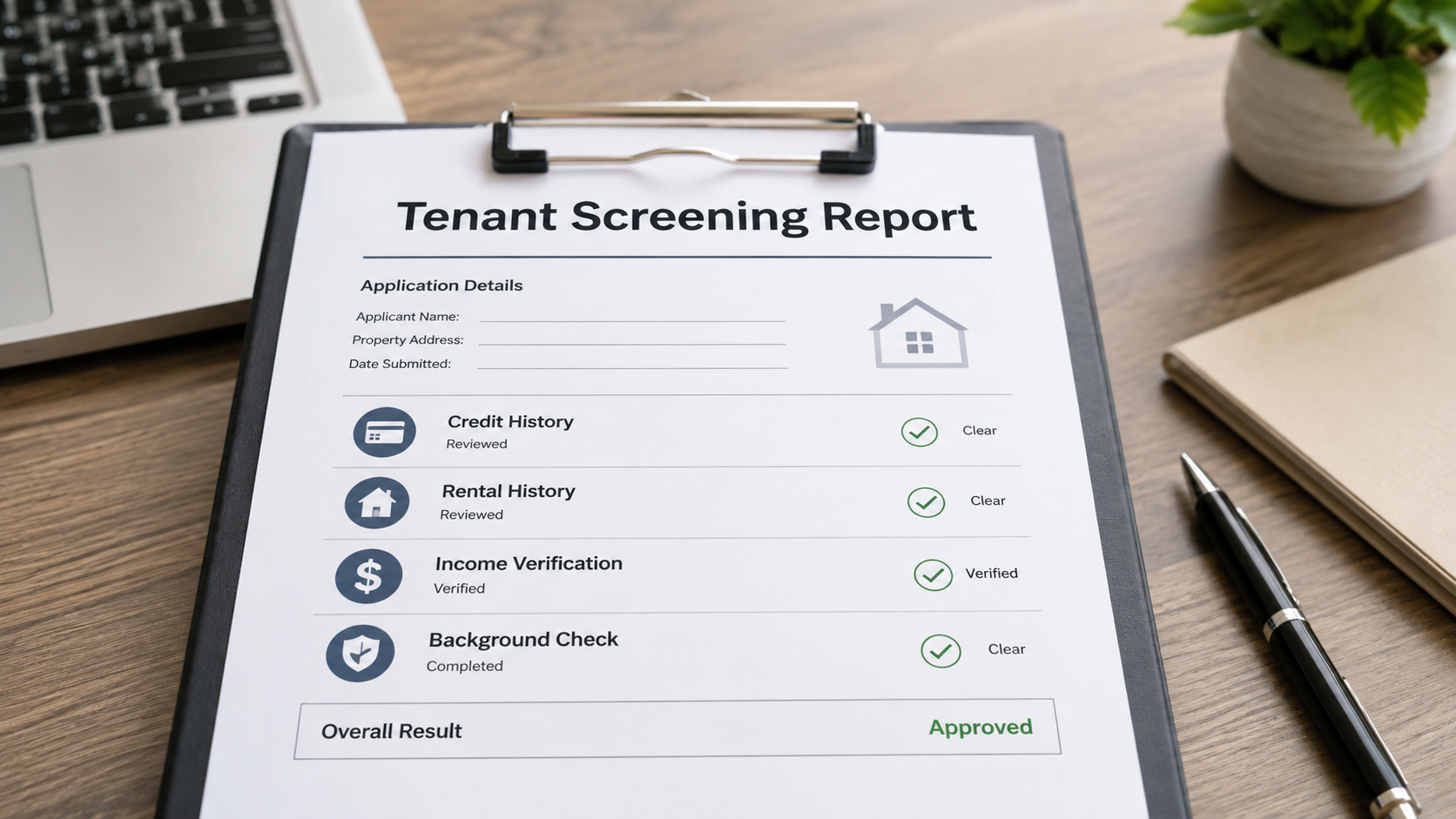
A tenant screening report can affect whether you get approved for an apartment, how much deposit you’re asked to pay, or whether you need a co-signer.
The problem is that many renters never see the report until something goes wrong.
You may apply for an apartment, get denied, and only hear a vague explanation like “you didn’t meet screening criteria.” That doesn’t tell you what the landlord saw. Was it credit? Rental history? An eviction-related record? A background check issue? A balance owed to a past landlord? Something that belongs to someone else?
That’s why it’s important to know how to get a copy of your tenant screening report.
You may not be able to prevent every denial, but you can ask for the report, review what’s being used about you, and dispute anything that’s wrong, outdated, duplicated, or incomplete.
What Is a Tenant Screening Report?
A tenant screening report is a report a landlord or property manager may use when deciding whether to rent to you.
It may also be called:
- Rental background check
- Tenant background check
- Resident screening report
- Rental screening report
- Applicant screening report
A tenant screening report may include more than your credit score.
Depending on the screening company and landlord, it may include:
- Credit history
- Rental history
- Eviction-related records
- Housing court records
- Missed rent or rental debt
- Collections
- Criminal background information
- Identity and address history
- Employment or income information
- Bankruptcy information
- A tenant score or recommendation
That means checking your regular credit report may not be enough. You may need to see the actual tenant screening report used for your application.
Why You Should Request the Report
If your rental application was denied, approved with conditions, or changed because of screening information, the report can help you understand what happened.
You should consider requesting the report if:
- Your application was denied.
- You were told you need a co-signer.
- You were asked to pay a larger deposit.
- You were offered higher rent than expected.
- You were told you didn’t meet screening criteria.
- You suspect an error affected your application.
- You’ve had multiple unexplained denials.
- You know you have old rental debt or eviction-related records.
- You’re worried someone else’s information is mixed with yours.
The report may show the problem clearly. Or it may show that the issue wasn’t what you expected.
Either way, it gives you something better than guessing.
Start With the Adverse Action Notice
If a landlord makes a negative decision because of information in a tenant screening report, credit report, or other consumer report, they may need to give you an adverse action notice.
An adverse action can include more than a denial. It may also include:
- Requiring a co-signer
- Requiring a larger deposit
- Charging higher rent
- Offering different lease terms
- Denying the application
The notice should tell you which company provided the report and how to contact that company. It should also explain that you can request a free copy of the report within the required timeframe and dispute inaccurate information.
If you were denied or approved with conditions and didn’t receive clear information, ask for it.
You can say:
“Can you please send me the adverse action notice and the name, address, and phone number of the company that provided the tenant screening report?”
That should be your first step.
Request the Report From the Screening Company
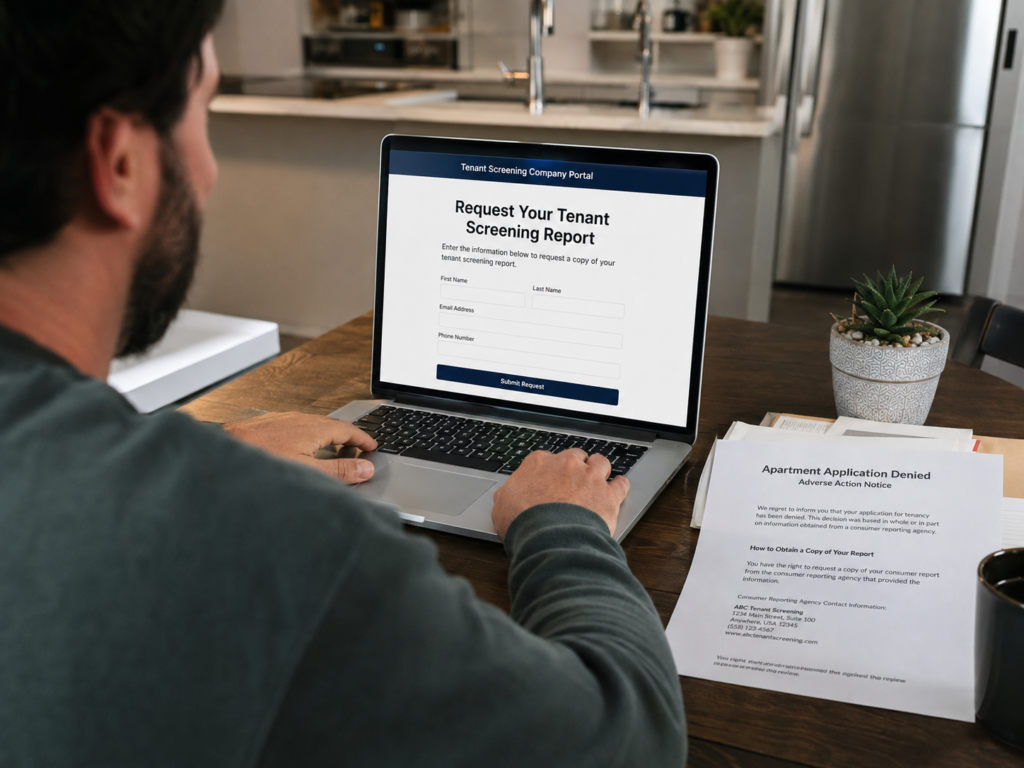
Once you know which company provided the report, contact that company directly.
The landlord may not give you the full report. In many cases, you need to request it from the tenant screening company.
When contacting the screening company, be ready to provide identifying information so they can locate your file.
They may ask for:
- Full legal name
- Current address
- Previous addresses
- Date of birth
- Last four digits of your Social Security number
- Copy of your ID
- Application property address
- Date of application
- Report number, if available
- Landlord or property manager name
Only send sensitive information through the company’s official website, secure portal, mail process, or verified contact method.
Be careful with random links or emails that don’t clearly come from the screening company.
Sample Message to Request Your Tenant Screening Report
Here’s a simple message you can use:
Subject: Request for Tenant Screening Report
Hello,
I recently applied for housing at [property name/address] and was informed that a tenant screening report may have been used in the rental decision.
I’m requesting a copy of the tenant screening report associated with my application.
My information is below:
Full Name: [Your Full Name]
Current Address: [Your Current Address]
Date of Birth: [Date of Birth]
Last Four Digits of SSN: [Last Four Digits, if requested]
Property Applied For: [Property Name or Address]
Date of Application: [Date]
Landlord/Property Manager: [Name, if known]
Report Number: [Report Number, if available]
Please send me a copy of the report and any instructions for disputing inaccurate, outdated, incomplete, or unverifiable information.
Thank you,
[Your Name]
Keep a copy of your request.
If you send it by mail, consider using a method that gives you proof of delivery.
What If You Don’t Know Which Company Was Used?
If you don’t know which tenant screening company was used, start by asking the landlord or property manager.
You can say:
“Can you tell me which tenant screening company was used for my application? I’d like to request a copy of the report and review it for accuracy.”
If you were denied or approved with conditions because of a report, ask for the adverse action notice too.
If the landlord still won’t provide the company name, you may need to check your emails, application portal, payment receipt, or screening authorization. Sometimes the screening company name appears during the application process.
Look for names connected to:
- Application portal
- Background check authorization
- Credit check disclosure
- Screening fee receipt
- Emails from the property manager
- Texts or application confirmations
You can also review the CFPB’s list of consumer reporting companies, which includes specialty reporting companies. Some focus on tenant screening, rental history, or background check information. That list can help you identify companies that may have reports about you.
Can You Get a Tenant Screening Report Before Applying?
Sometimes, but it depends on the company.
Tenant screening is more complicated than regular credit reports because different landlords use different screening companies. There isn’t one single tenant screening report that every landlord checks.
That means you may not know which report matters until a landlord runs it.
Still, you may be able to request your file from certain tenant screening or specialty consumer reporting companies, especially if you know which company has been used before. The CFPB’s consumer reporting company list can help you find companies and request instructions.
Before applying, you can also ask landlords:
- “Do you use a tenant screening company?”
- “Which company do you use?”
- “Does the report include credit?”
- “Does it include eviction or housing court records?”
- “Can I request a copy if I’m denied?”
- “Are there automatic denial factors I should know about?”
That helps you understand what may be reviewed before you pay an application fee.
Why Tenant Screening Reports Can Be Hard to Track Down
Tenant screening reports can be frustrating because there are many screening companies.
One landlord may use one company. Another landlord may use a completely different company. Some screening platforms combine information from credit bureaus, public records, rental history databases, background check providers, or property management systems.
That means a report problem may not show up everywhere.
For example:
- Your credit report may look fine, but a tenant screening report may show rental debt.
- One screening company may show an eviction filing, while another doesn’t.
- A report may show a dismissed case without the final outcome.
- A record may be duplicated in one database.
- A landlord may rely on a screening score or recommendation you don’t fully see.
This is why you should request the specific report used in the rental decision whenever possible.
What to Look for When You Get the Report
Once you get your tenant screening report, read it carefully.
Don’t only look for a score. Go section by section.
Check:
- Your name
- Date of birth
- Social Security number details, if shown
- Current and past addresses
- Rental history
- Credit information
- Collections
- Rental debt
- Eviction-related records
- Housing court records
- Criminal background information
- Bankruptcy information
- Employment or income details
- Scores, risk labels, or recommendations
- Any notes about denial factors
Look for anything that seems wrong, old, duplicated, incomplete, or not yours.
Common Tenant Screening Report Errors
Tenant screening reports can contain mistakes.
Common errors include:
- Information that belongs to someone else
- Wrong addresses
- Mixed identity information
- Duplicate records
- Rental debt you don’t owe
- Paid debt still showing unpaid
- Incorrect balances
- Eviction filings without final case results
- Dismissed cases that don’t say dismissed
- Sealed or expunged records appearing incorrectly
- Old negative information
- Criminal records that aren’t yours
- Incorrect employment or income information
- Accounts that don’t match your credit report
These errors can affect approval, deposits, rent terms, or co-signer requirements.
If something is wrong, dispute it.
Pay Special Attention to Eviction Records
Eviction-related records can cause serious rental application problems.
A report may show that a case was filed, but that doesn’t always mean you were evicted. The case may have been dismissed, settled, sealed, expunged, or resolved another way.
Check whether the report shows:
- The correct court
- The correct case number
- The correct parties
- The final outcome
- Whether the case was dismissed
- Whether the case was sealed or expunged
- Whether the record appears more than once
- Whether the case belongs to someone else
If the report is missing the final outcome, gather court records and dispute the incomplete information.
A filing without context can make your rental history look worse than it is.
Check Rental Debt Carefully
Rental debt can be a major issue in tenant screening.
Look for balances connected to:
- Prior landlords
- Apartment complexes
- Property management companies
- Collection agencies
- Lease-break fees
- Move-out charges
- Unpaid utilities
- Damage charges
- Cleaning fees
- Court costs
Ask yourself:
- Is this debt mine?
- Is the amount correct?
- Was my security deposit applied?
- Was the debt paid or settled?
- Is it duplicated?
- Is it too old?
- Is it currently disputed?
- Do I have proof?
If rental debt is wrong, dispute it. If it’s accurate but resolved, keep proof in your renter packet.
What to Do If the Report Is Wrong
If you find inaccurate, outdated, incomplete, duplicated, or unverifiable information, dispute it with the tenant screening company.
You may also need to contact the source of the information, such as:
- A prior landlord
- Property management company
- Debt collector
- Court
- Credit reporting company
- Public records provider
- Background check provider
When disputing, include:
- Your full name
- Contact information
- Report number, if available
- The specific item you’re disputing
- Why the item is wrong
- Copies of supporting documents
- A request to correct or remove the information
- A request for written results
Helpful documents may include:
- Court dismissal records
- Payment receipts
- Settlement letters
- Zero-balance letters
- Lease documents
- Move-out statements
- Letters from prior landlords
- Proof of identity
- Proof of address
- Records showing a case was sealed or expunged
- Prior dispute confirmations
Be specific.
Instead of:
“This report is wrong.”
Say:
“The report lists an eviction filing from May 2023 but doesn’t show that the case was dismissed on June 12, 2023. I’ve attached the court record showing the dismissal. Please investigate and update or remove the incomplete information.”
Specific disputes are easier to investigate.
How Long Does a Dispute Take?
Tenant background check companies generally must investigate disputes within a set period. In many cases, that investigation period is about 30 days, though some situations may allow more time and some states may have shorter deadlines.
The company should tell you the results in writing.
If the report is corrected, ask for an updated copy. You may also ask whether the corrected report can be sent to the landlord who denied or conditionally approved you.
If the apartment is still available, you can tell the landlord:
“I disputed inaccurate information in the tenant screening report, and the report has been corrected. I can provide the updated report for review.”
That may not guarantee approval, but it gives you a cleaner record.
What If the Screening Company Doesn’t Fix It?
If the screening company doesn’t correct the report, you may still have options.
You can:
- Review the response carefully.
- Check whether they actually investigated the item.
- Submit another dispute with stronger documents.
- Contact the company that supplied the information.
- Ask to add a statement of dispute to your file, if available.
- Contact a legal aid organization.
- Contact a local fair housing organization.
- Submit a complaint to the CFPB.
- Report the issue to the FTC.
- Speak with a qualified attorney if needed.
Keep records of every dispute, response, and document.
You may need that paper trail if the same issue continues causing problems.
Should You Send the Report to a Future Landlord?
Sometimes it may help, but be careful.
If your report has been corrected, or if you have documents explaining a confusing item, you may choose to include those in your renter packet.
For example, if an old eviction filing appears but was dismissed, you may include the court dismissal record. If rental debt was paid, you may include a zero-balance letter. If a report error is under dispute, you may include proof of the dispute.
You don’t necessarily need to send your full tenant screening report to every landlord. It may contain sensitive information. Instead, provide targeted documents that support your application.
A short explanation plus proof usually works better than overwhelming the landlord with everything.
What If You Haven’t Been Denied Yet?
If you haven’t been denied but you’re worried about tenant screening, ask questions before applying.
You can ask the landlord:
- “Do you use a tenant screening company?”
- “Which company do you use?”
- “What information is reviewed?”
- “Do you have a minimum credit score?”
- “Do you deny applicants with eviction filings?”
- “Do you consider dismissed or sealed cases?”
- “Do you deny applicants with rental debt?”
- “Do you review applications case by case?”
- “Would documentation help if something needs context?”
The goal is to avoid paying an application fee for a property where approval is unlikely.
You may not get every answer, but even a few answers can help.
What If the Landlord Won’t Tell You Anything?
Some landlords may be slow, vague, or unfamiliar with the process.
If they won’t answer questions before you apply, you have to decide whether the fee is worth the risk.
But if they denied you or changed the terms because of information in a consumer report, you should ask for the adverse action notice and screening company information.
Keep your message simple:
“Can you please confirm whether a tenant screening report or credit report was used in the rental decision? If so, please send the adverse action notice and the screening company’s contact information.”
If you still don’t receive the required information, consider contacting a consumer protection agency, legal aid office, fair housing organization, or qualified attorney.
Keep a Tenant Screening Folder
If you’ve had rental application problems, create a folder for your reports and documents.
Save:
- Application copies
- Fee receipts
- Denial notices
- Adverse action notices
- Screening company names
- Tenant screening reports
- Credit reports
- Dispute letters
- Dispute confirmations
- Court records
- Payment receipts
- Letters from landlords
- Updated reports
- Emails and texts
This folder can help you apply smarter and respond faster if the same issue comes up again.
Quick Checklist: How to Get Your Tenant Screening Report
If you need a copy, follow these steps:
- Ask the landlord whether a tenant screening report was used.
- Request the adverse action notice if you were denied or approved with conditions.
- Identify the screening company.
- Contact the screening company directly.
- Request a free copy if you’re entitled to one.
- Provide the information needed to locate your file.
- Save proof of your request.
- Review the report carefully.
- Look for errors, duplicates, old information, or missing outcomes.
- Dispute anything inaccurate.
- Keep copies of all documents and responses.
Don’t stop at “I was denied.” Find out what the report says.
Sample Message to the Landlord
Here’s a simple message you can send after a denial or conditional approval:
Hi [Landlord or Property Manager Name],
I understand my rental application was not approved / was approved with conditions. Can you please confirm whether the decision was based in whole or in part on a tenant screening report, credit report, or other consumer report?
If so, please send the adverse action notice and the name, address, and phone number of the company that provided the report. I’d like to request a copy and review it for accuracy.
Thank you,
[Your Name]
That message is polite, clear, and focused.
The Bottom Line on Getting a Copy of Your Tenant Screening Report
A tenant screening report can affect whether you’re approved for an apartment, denied, asked for a co-signer, charged a larger deposit, or offered different rental terms.
If a landlord uses a tenant screening report or credit report to make a negative decision, ask for the adverse action notice. That notice should help you identify the company that provided the report so you can request a copy and review it.
Once you get the report, check it carefully. Look for wrong names, incorrect addresses, rental debt, eviction-related records, duplicate items, outdated information, missing case outcomes, and anything that doesn’t belong to you.
If something is wrong, dispute it in writing and include proof.
The goal isn’t to become an expert in tenant screening. The goal is to understand what’s being used about you before it costs you another application fee.
Renters.help is built for people trying to understand rental approval problems, especially when tenant screening reports, credit, rental debt, eviction records, or denials get confusing.
Need help understanding what may be showing up in your tenant screening report? Renters.help can help you know what to check before your next rental application.