
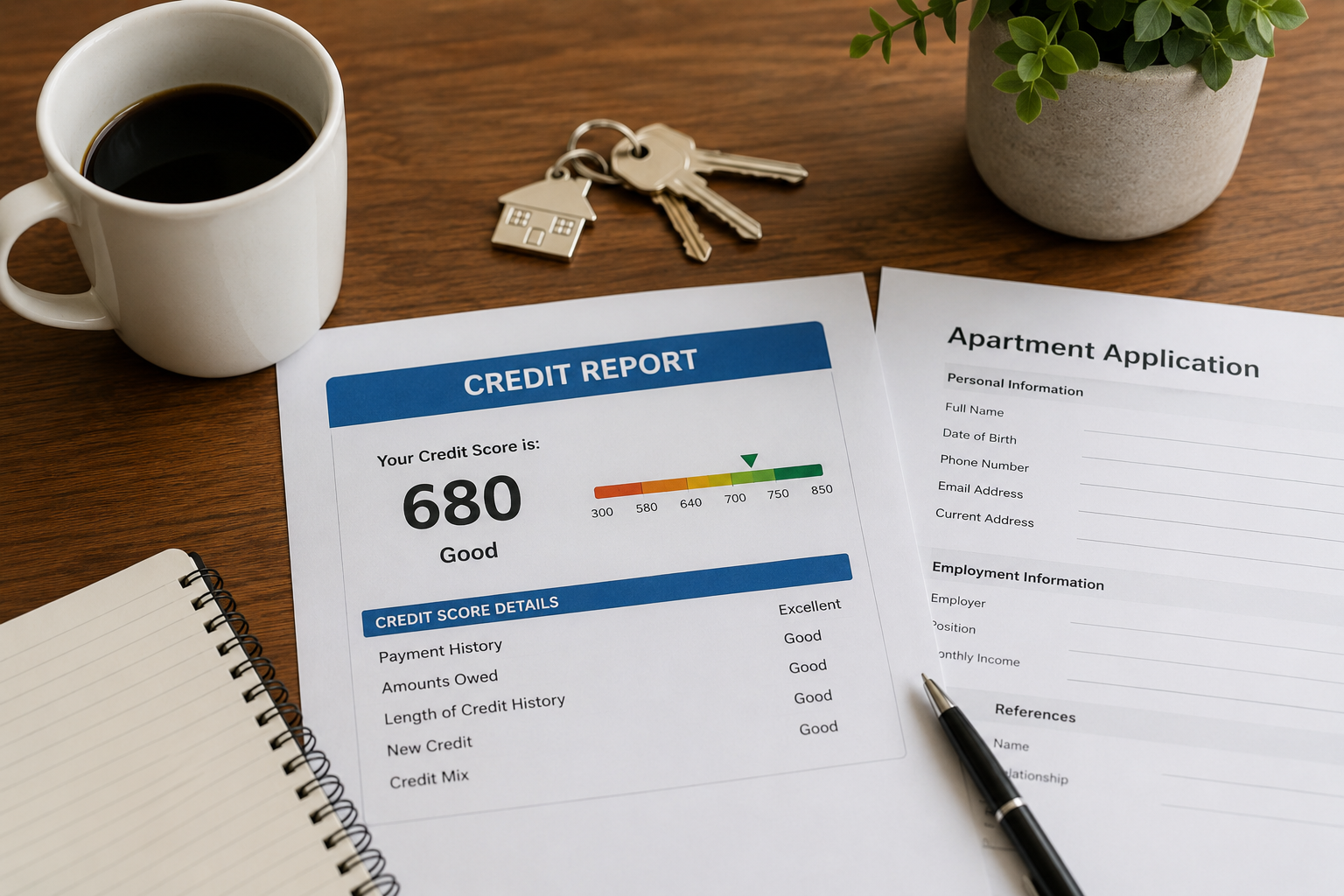
Before you apply for an apartment, it’s smart to look at your credit report the way a landlord might.
Not because your credit report tells your whole story. It doesn’t. But it can affect how a landlord or property manager sees your application, especially if they use a credit check or tenant screening report.
If you have bad credit, no credit, collections, rental debt, or a recent denial, checking your credit report before applying can help you avoid surprises. You may find errors. You may find old accounts you forgot about. You may find a collection that needs explanation.
Or you may realize your credit report isn’t the issue at all, and the problem may be income, rental history, or a tenant screening report.
The goal isn’t to panic over every line. The goal is to understand what a landlord may see before you pay another application fee.
Credit Report vs. Credit Score
A credit report and a credit score aren’t the same thing.
Your credit report is the detailed record. It may include accounts, payment history, balances, collections, credit inquiries, and personal information connected to your credit file.
Your credit score is a number based on information in your credit report. Different companies may use different scoring models, so you may not have just one score.
For apartment applications, landlords may look at your credit score, your full credit report, or a tenant screening report that includes credit information. Some landlords care mostly about the score. Others care more about the details behind it.
That’s why reading the report matters.
A score may tell you there’s a problem. The report helps you figure out what the problem is.
Where to Get Your Credit Report
You can request free credit reports from the three major credit reporting companies: Equifax, Experian, and TransUnion.
The official site for free credit reports authorized by federal law is AnnualCreditReport.com. Be careful with websites that advertise “free” reports but require paid subscriptions, trial memberships, or extra services you didn’t ask for.
You usually want to check all three reports because they may not be identical. One account may appear on one report but not another. A collection may show up on two reports. An error may only appear on one.
If you’re applying for apartments soon, check your reports before you start submitting applications. That way, if something looks wrong, you have time to gather documents, dispute errors, or prepare an explanation.
And checking your own credit report won’t hurt your credit score.
Start With Your Personal Information
The first section to review is your personal information.
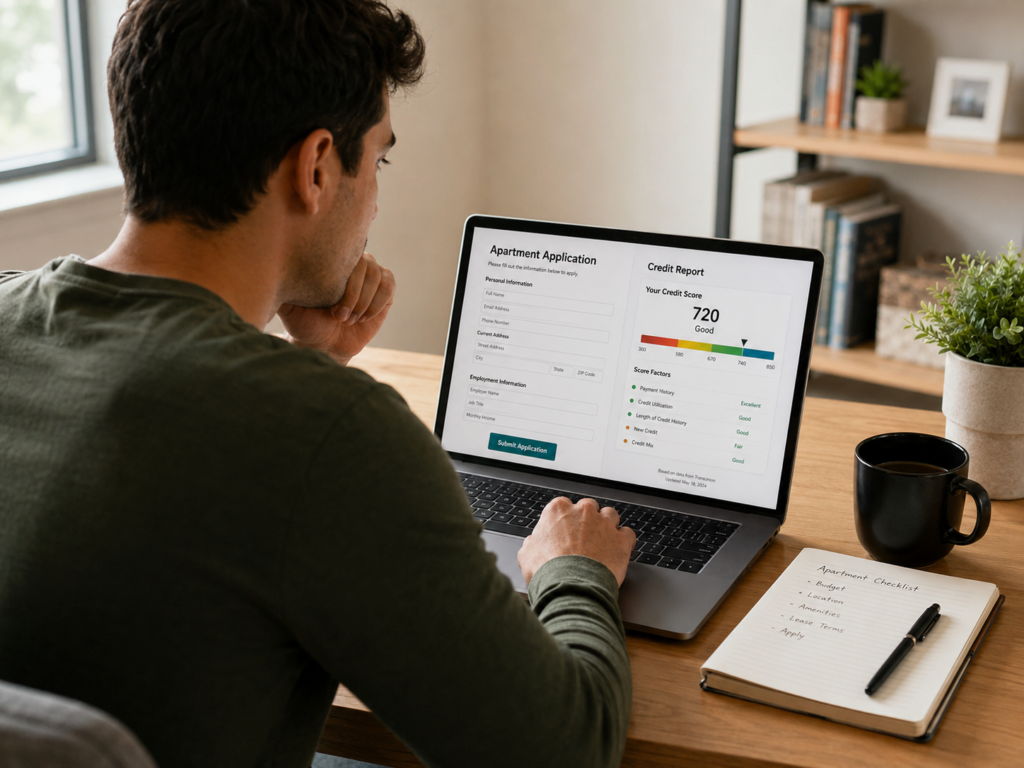
Look for:
- Name variations
- Current address
- Past addresses
- Date of birth
- Social Security number details, if shown
- Phone numbers
- Employer information, if listed
Small differences may not be a big deal. For example, a maiden name, nickname, or old address may appear because it was connected to a past account.
But some errors can signal a bigger problem.
Pay close attention if you see:
- A name you don’t recognize
- An address where you never lived
- An employer you never worked for
- Personal information that belongs to someone else
- Multiple identity details that seem mixed together
That could mean your file has been mixed with someone else’s, especially if they have a similar name. It could also be a sign of identity theft.
If your personal information is wrong, don’t ignore it. Incorrect identity details can lead to accounts or records being matched to the wrong person.
Review Every Account
Next, go through each account listed on your credit report.
This may include:
- Credit cards
- Auto loans
- Personal loans
- Student loans
- Mortgages
- Retail cards
- Lines of credit
- Collection accounts
- Closed accounts
- Charged-off accounts
For each account, check:
- Is this account yours?
- Is the balance correct?
- Is the payment status correct?
- Is the account marked open or closed correctly?
- Are late payments reported correctly?
- Is the creditor name familiar?
- Are there duplicate accounts?
- Does the account show the right dates?
You don’t need to understand every technical detail at first. Start with the basics: “Is this mine, and does it look accurate?”
If you see an account you don’t recognize, investigate it before applying for an apartment. It may be a creditor name you don’t remember, a collection agency name, or a sign that something is wrong.
Pay Close Attention to Late Payments
Late payments can matter to landlords because they may suggest you’ve had trouble paying bills on time.
When reviewing your credit report, look for accounts marked 30, 60, 90, or more days late. Then ask:
- Was the payment actually late?
- Is the date correct?
- Was the account already closed?
- Was the payment made on time but reported incorrectly?
- Was the late payment part of a hardship that has since been resolved?
- Is the account now current?
A recent late payment may worry a landlord more than an older one. A single late payment from years ago may be easier to explain than a pattern of recent missed payments.
If a late payment is wrong, dispute it. If it’s accurate, be ready to explain it briefly if the landlord asks or if it’s likely to affect approval.
A short explanation may be enough:
“My credit was affected by a temporary hardship, but the account is current now and my income is stable.”
Don’t overexplain. Focus on what changed.
Check Collections Carefully
Collections can make apartment approval harder, especially if they’re recent, unpaid, or tied to a previous rental.
When reviewing collections, look at:
- Collection agency name
- Original creditor
- Balance
- Date opened
- Account status
- Whether it’s paid, unpaid, settled, or disputed
- Whether it appears more than once
- Whether it belongs to you
Collections may come from credit cards, medical bills, utilities, phone bills, personal loans, or rental balances.
Rental collections can be especially important because they’re directly connected to housing. A landlord may treat unpaid rent or a balance owed to a past apartment differently than an old medical bill or credit card account.
If a collection is paid or settled, gather proof. If it’s wrong, dispute it. If it’s accurate and unpaid, understand that it may come up during screening.
Look for Rental Debt
Rental debt can appear in different ways. It may show up as a collection account, a balance from a property management company, or a debt connected to a previous landlord.
Rental debt may include:
- Unpaid rent
- Lease-break fees
- Move-out charges
- Damage charges
- Utility balances
- Late fees
- Cleaning fees
- Court-related costs
If you see rental debt on your credit report, don’t ignore it.
Ask yourself:
- Is the amount accurate?
- Was my security deposit applied?
- Did I already pay this?
- Was there a dispute with the landlord?
- Is this connected to an eviction or court case?
- Do I have documents showing the debt was paid or settled?
If you’re applying soon, rental debt may need a short explanation and supporting documents. If the amount is wrong, gather proof and dispute it.
Check for Charge-Offs
A charge-off usually means a creditor wrote off an unpaid account as a loss. That doesn’t necessarily mean you no longer owe the debt. The account may still be reported, sold, or sent to collections.
Landlords may see charge-offs as a sign of unresolved debt.
When reviewing charge-offs, check:
- Is the account yours?
- Is the balance correct?
- Is it also listed as a collection?
- Is it paid, settled, or unpaid?
- Are the dates accurate?
- Is the same debt being reported more than once in a confusing way?
If the charge-off is old, paid, or settled, documentation can help. If it’s wrong, dispute it.
Review Bankruptcies and Public Record Information
Credit reports may include certain public record information, such as bankruptcy.
If bankruptcy appears, check:
- Is it yours?
- Is the filing date correct?
- Is the status correct?
- Are accounts included in the bankruptcy still showing correctly?
- Is anything being reported as unpaid when it should show included in bankruptcy?
Bankruptcy can feel uncomfortable to explain, but it doesn’t always mean automatic denial. Some landlords may care more about your current income, rental history, and whether you have new unpaid debts.
If bankruptcy appears on your report, be ready with a calm explanation if needed:
“I went through bankruptcy after a difficult financial period, but my current income is stable and I can provide proof that I’m able to afford the rent.”
Again, short and steady is usually better than a long story.
Check Your Balances
High credit card balances can affect your credit score and may also make your financial situation look stretched.
When reviewing revolving accounts like credit cards, check:
- Current balance
- Credit limit
- Whether the balance is accurate
- Whether a recent payment has updated
- Whether the account is maxed out
- Whether the account is past due
A landlord may not analyze your credit utilization in detail, but high balances can contribute to a lower score. They may also raise questions if your income already looks tight compared with the rent.
If you recently paid down a balance and the report hasn’t updated yet, keep proof of payment in case you need it.
Review Credit Inquiries
Credit inquiries show when someone accessed your credit report.
Some inquiries are soft and don’t affect your score. Others are hard inquiries, usually connected to credit applications.
For apartment hunting, inquiries may matter if you’ve applied for several credit cards, loans, or rentals recently. A landlord may not focus heavily on this, but too many recent applications can make your credit file look more strained.
Review inquiries for:
- Companies you don’t recognize
- Applications you didn’t submit
- Multiple recent hard inquiries
- Possible signs of fraud
If an inquiry doesn’t look familiar, investigate it.
Look for Duplicate or Mixed Information
Duplicate information can make your credit report look worse than it is.
For example:
- The same collection appears twice.
- A debt appears under both the original creditor and a collection agency in a confusing way.
- An account that was transferred or sold looks like multiple unpaid accounts.
- A paid account still appears as unpaid.
- Information from someone else appears on your report.
Mixed files can happen when someone else has a similar name, address, Social Security number, or date of birth. This can be especially damaging if the other person has negative credit information.
If something doesn’t look like yours, don’t assume it’s harmless. Dispute it and include documents that prove your identity and the error.
What a Landlord May Care About Most
Every landlord is different, but some credit report items may raise more concern than others.
A landlord may pay close attention to:
- Recent missed payments
- Current past-due accounts
- Collections
- Rental debt
- Utility collections
- Charge-offs
- Bankruptcy
- High balances
- Fraud alerts or identity issues
- Accounts that don’t match your explanation
Rental-related items may matter more because they connect directly to the apartment application.
For example, unpaid rent from a previous landlord may be more concerning than an old medical collection. A utility collection may matter because utilities are part of housing stability. A recent pattern of missed payments may matter more than one old issue from years ago.
The point isn’t to judge yourself. It’s to understand what may need explanation or documentation.
Credit Reports Don’t Show Everything
Your credit report is important, but it doesn’t show everything a landlord may review.
A tenant screening report may include rental history, eviction-related records, housing court records, criminal background information, income information, identity details, and sometimes a screening score or recommendation.
That means your credit report may look fine, but a tenant screening report could still create a problem.
Before applying, ask:
- “Do you use a tenant screening company?”
- “Which company do you use?”
- “Does the report include credit?”
- “Does it include eviction or housing court records?”
- “Do you review applications case by case?”
- “If I’m denied, will I receive the report information?”
If you’re denied because of a tenant screening report, request the report and review it separately.
What to Do If You Find an Error
If you find an error on your credit report, dispute it with the credit reporting company that’s showing the wrong information. You may also want to contact the company that provided the information, such as a creditor, collection agency, or lender.
Your dispute should include:
- Your full name
- Your current address
- The item you’re disputing
- Why it’s wrong
- Copies of supporting documents
- A request for correction or removal
- Your contact information
Helpful documents may include:
- Payment receipts
- Bank statements
- Settlement letters
- Zero-balance letters
- Court records
- Identity theft reports
- Bankruptcy documents
- Letters from creditors
- Prior dispute confirmations
Be specific.
Instead of:
“This account is wrong.”
Say:
“This collection account from ABC Collections does not belong to me. I have never had an account with the original creditor listed. I’ve attached proof of my identity and current address. Please investigate and remove the inaccurate account.”
Or:
“This account shows a balance of $750, but it was paid on May 3, 2025. I’ve attached the payment confirmation and zero-balance letter. Please update the account.”
Specific disputes are easier to investigate.
Should You Wait to Apply Until Errors Are Fixed?
If you have time, it may be smart to wait until major errors are disputed or corrected.
But housing timelines aren’t always flexible. Sometimes you need to apply before everything is resolved.
If you’ve disputed an error but it hasn’t been fixed yet, keep proof of the dispute. You may be able to include it in your renter packet or explain it to the landlord.
You can say:
“There’s an item on my credit report that I believe is inaccurate. I’ve filed a dispute and included supporting documentation. I’m happy to provide proof of income, rental references, and the dispute confirmation.”
That doesn’t guarantee approval, but it helps show you’re not ignoring the issue.
Build a Renter Packet Based on What You Find
After reading your credit report, gather documents that address the weak spots.
If you have late payments, gather proof that your accounts are current now.
If you have collections, gather paid-in-full letters, settlement letters, or dispute confirmations.
If you have rental debt, gather receipts, landlord letters, or court documents.
If you have no credit history, gather proof of income, savings, and references.
Your renter packet may include:
- Photo ID
- Recent pay stubs
- Employment verification
- Bank statements, if you’re comfortable sharing them
- Proof of savings
- Rental references
- Proof of on-time rent payments
- Credit explanation letter
- Paid or settled debt letters
- Dispute confirmations
- Co-signer information, if needed
A credit report may show the problem. Your renter packet should help show the full picture.
Sample Message to a Landlord
If your credit report has issues, you can ask about screening rules before paying an application fee.
Here’s a simple message:
Hi [Landlord or Property Manager Name],
I’m interested in applying for [unit/address]. Before I pay the application fee, can you tell me whether you have a minimum credit score or any automatic denial factors related to collections, rental debt, or recent late payments?
My credit isn’t perfect, but I have stable income and can provide proof of income, rental references, and documentation for any resolved accounts. I just want to understand the screening criteria before applying.
Thank you.
This message doesn’t overshare. It gives the landlord enough context and helps you avoid wasting money on bad-fit applications.
Quick Credit Report Review Checklist
Before applying for an apartment, check:
Your name and personal information
Current and past addresses
Accounts that don’t belong to you
Late payments
Current past-due accounts
Collections
Rental debt
Charge-offs
Bankruptcies
Balances and credit limits
Duplicate accounts
Accounts marked unpaid that were paid
Old negative information
Suspicious inquiries
Signs of identity theft
Dispute status for any errors
Then ask:
- What might a landlord worry about?
- What can I explain clearly?
- What documents prove the issue was resolved?
- What should I dispute before applying?
- Should I ask about screening criteria before paying a fee?
The Bottom Line
Reading your credit report before applying for an apartment can help you avoid surprises.
Start with your personal information. Review every account. Look closely at late payments, collections, rental debt, charge-offs, balances, inquiries, and anything that doesn’t belong to you. If something is wrong, dispute it with supporting documents.
Then use what you learn to prepare a stronger rental application.
Your credit report may not tell your whole story, but a landlord may still use it to make a decision. The more you understand what’s on it, the better you can explain, document, dispute, or prepare.
And remember: your credit report is only one part of the rental process. A landlord may also use tenant screening reports, rental history, income verification, references, and other information.
The goal isn’t to make your credit look perfect overnight. The goal is to stop applying blind.
Renters.help is built for people trying to understand what may be getting in the way of rental approval, especially when credit reports, tenant screening reports, collections, rental debt, or denials get confusing.
Not sure what your credit report is saying before you apply? Renters.help can help you understand what landlords may be looking at before your next rental application.