
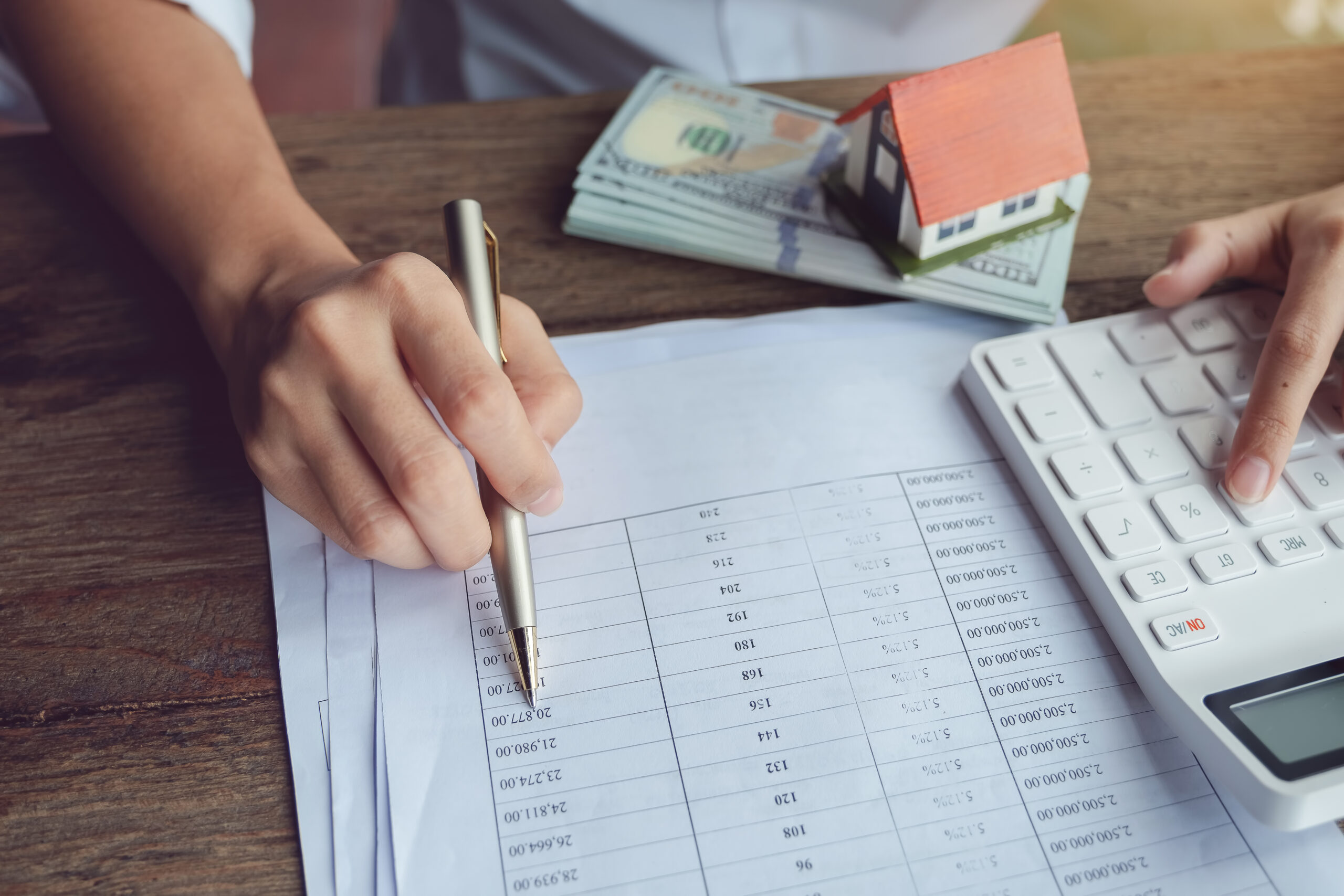
You’ve been saving for a house.
You finally have money in the bank.
Then someone mentions closing costs.
Then the home inspection.
Then earnest money.
Then homeowners insurance.
Then moving expenses.
And suddenly the amount you thought you needed to buy your first home doesn’t look like the whole number anymore.
That’s because a down payment is only one part of the cash involved in buying a home.
A first-time buyer may also need money for closing costs, inspections, prepaid taxes and insurance, moving, immediate repairs, and the expenses that start showing up shortly after the keys are handed over.
And ideally, you’ll still have money left in savings when the process is finished.
So how much money do you actually need?
There isn’t one universal number. Your mortgage, home price, location, assistance programs, property, insurance costs, and transaction all affect the answer.
But you can build a much better estimate by separating the money into a few different buckets.
No, You Don’t Necessarily Need 20% Down
This is probably the first myth worth clearing up.
You may have heard that buying a home requires a 20% down payment.
It doesn’t always.
Twenty percent can have advantages, but several mortgage programs allow qualified buyers to purchase with considerably less.
Depending on eligibility and lender requirements, options may include:
- Certain conventional mortgages with down payments as low as 3%
- FHA-insured mortgages with a minimum down payment as low as 3.5% in qualifying circumstances
- VA-backed loans that may require no down payment for eligible borrowers
- USDA loans that may offer no-down-payment financing to eligible borrowers and properties
That doesn’t mean the lowest possible down payment is automatically the right choice.
A smaller down payment generally means you borrow more.
Depending on the mortgage, it may also affect:
- Your monthly payment
- Mortgage insurance
- Interest costs
- Cash reserves
- Loan qualification
The important lesson is:
Don’t automatically assume you need 20%, and don’t automatically assume the smallest possible down payment is best.
Look at the entire mortgage.
What Does a Down Payment Actually Do?
Your down payment is the portion of the purchase price you pay upfront rather than finance.
Suppose you buy a home for:
$300,000
A 3% down payment would be:
$9,000
A 5% down payment would be:
$15,000
A 10% down payment would be:
$30,000
A 20% down payment would be:
$60,000
The larger the down payment, the smaller the amount you generally need to borrow.
But putting more money down also means using more of your savings.
That creates an important first-time buyer question:
Would putting more money down leave me without enough cash for everything else?
You don’t want to become a homeowner with $50 in your checking account.
Closing Costs Are Separate From Your Down Payment
This is where many first-time buyers get surprised.
Closing costs are expenses associated with completing the mortgage and transferring the property.
The Consumer Financial Protection Bureau says a rough early estimate is generally around 2% to 5% of the purchase price, not including the down payment.
Actual costs can vary significantly.
Depending on the transaction, closing-related expenses may include things such as:
- Lender origination charges
- Appraisal
- Title-related services
- Title insurance
- Government recording or transfer charges
- Prepaid interest
- Homeowners insurance
- Property tax-related amounts
- Initial escrow deposits
- Other mortgage or settlement charges
Some of these costs may be negotiated, paid differently, covered through assistance programs, or affected by seller or lender credits.
But don’t build your savings plan assuming someone else will pay them.
What 2% to 5% Looks Like
On a $250,000 home, 2% to 5% is roughly:
$5,000 to $12,500
On a $350,000 home:
$7,000 to $17,500
On a $450,000 home:
$9,000 to $22,500
That’s a very wide range.
Your actual Loan Estimate will eventually provide a much better picture of your expected mortgage costs.
What Is Earnest Money?
Earnest money is money a buyer may put down after an offer is accepted to demonstrate serious intent to complete the purchase.
The amount and customary practice can vary considerably by market and contract.
An important distinction:
Earnest money generally isn’t simply another expense added on top of everything else.
If the purchase proceeds normally, it is typically accounted for as part of the funds already paid toward the transaction at closing.
But you still need access to the cash earlier in the process.
And depending on the purchase contract, there can be circumstances where earnest money is refundable and circumstances where you could lose it.
Before sending earnest money, understand:
- How much you’re paying
- Who will hold it
- When it is due
- How it will be credited
- When it may be refundable
- When it could be forfeited
Your purchase agreement matters.
Budget for the Home Inspection
A home inspection is another expense that may happen before closing.
The cost varies based on the home, location, inspector, and services performed.
You may also decide you need additional inspections involving areas such as:
- Roof
- Sewer or septic system
- Well
- Termites or other pests
- Foundation
- Chimney
- Mold or moisture
- Other property-specific concerns
An inspection adds to your upfront costs.
But skipping appropriate due diligence just to save money can expose you to much larger expenses later.
A few hundred dollars spent investigating a property can be very different from discovering a major repair after you own it.
The Appraisal May Be Another Cost
Mortgage lenders generally need to evaluate the property’s value.
That commonly involves an appraisal.
Depending on the lender and transaction, the appraisal fee may be paid earlier in the process or reflected among your loan-related costs.
Don’t assume the home inspection and appraisal are the same thing.
They serve different purposes.
The inspection primarily helps you understand the condition of the property.
The appraisal primarily helps the lender evaluate the property’s value for the mortgage.
You may need both.
Don’t Forget Prepaid Expenses
The phrase closing costs can make it sound like every dollar paid at closing is simply a fee.
It isn’t.
Some of the money may go toward expenses you would have paid as a homeowner anyway.
For example, you may have to prepay or fund amounts related to:
- Homeowners insurance
- Property taxes
- Mortgage interest
- Escrow reserves
Your lender should provide more specific figures as you move through the process.
This is another reason the amount needed at closing can be significantly larger than the down payment alone.
Homeowners Insurance Can Affect Your Budget Earlier Than You Expect
If you’re financing the purchase, your lender will generally require appropriate homeowners insurance before funding the mortgage.
Insurance costs can vary substantially depending on factors such as:
- Property location
- Home characteristics
- Replacement cost
- Deductible
- Coverage
- Local hazards
- Claims history and underwriting factors
Some properties may also require separate or additional coverage for particular risks.
Don’t wait until two days before closing to investigate insurance.
A home that appears comfortably within your mortgage budget may look different once you know the insurance cost.
Then You Actually Have to Move
Closing day isn’t the last day you spend money.
You still have to move into the house.
Possible expenses include:
- Movers
- Truck rental
- Gas
- Boxes
- Packing supplies
- Storage
- Utility setup
- Internet setup
- Cleaning
- Locks
- Pet-related moving expenses
A move across town using your own vehicle might cost relatively little.
A long-distance move with professional movers could cost substantially more.
Include your actual moving situation in your homebuying savings goal.
Your First House Will Probably Need Something
Even a move-in-ready home tends to produce a shopping list.
You may need:
- New locks
- Smoke or carbon monoxide detectors
- Fire extinguisher
- Basic tools
- Ladder
- Lawn equipment
- Window coverings
- Appliances
- Filters
- Cleaning supplies
- Furniture
- Minor repairs
You don’t have to furnish every room during your first weekend.
In fact, resisting the urge to immediately “finish” the house can protect your finances during the first few months of ownership.
Start with:
Safety.
Then:
Necessary repairs.
Then:
Things that make daily life function.
Decorating can wait.
Keep Money for Repairs
This is one of the biggest changes when you go from renter to homeowner.
When something breaks in a rental, you generally contact the landlord or property manager.
When you own the home, the repair may be yours.
That could be:
A $150 repair.
Or a $1,500 repair.
Or much more.
The week after closing is a terrible time to discover that every available dollar went into buying the house.
Which brings us to one of the most important parts of the savings plan.
Don’t Spend Your Entire Savings at Closing
Imagine you have:
$30,000 saved
and you can technically put the entire $30,000 toward the purchase.
That doesn’t necessarily mean you should.
You also need to think about what remains after closing.

The CFPB recommends accounting for moving expenses, initial home costs, and an emergency cushion when deciding how much of your savings is actually available for the home purchase.
A common rule of thumb it identifies is roughly three to six months of expenses for an emergency cushion.
Your appropriate reserve depends on your own finances.
But the principle is important:
The amount you can technically bring to closing and the amount you can safely bring to closing may not be the same.
The Four-Bucket First-Time Buyer Savings Plan
Instead of thinking:
“I need $30,000 to buy a house.”
Break the goal into four buckets.
Bucket 1: Down Payment
Your target:
$______
This depends on your mortgage, home price, and strategy.
Bucket 2: Closing and Purchase Costs
Your target:
$______
Include your estimated closing costs plus things you expect to pay during the transaction.
Bucket 3: Moving and Immediate Home Expenses
Your target:
$______
Include the move, utility setup, immediate repairs, and basic items the home needs.
Bucket 4: Money You Intentionally Keep
Your target:
$______
This is your emergency cushion.
It’s money you don’t want the home purchase to consume.
Now your savings goal has a purpose instead of being one giant number.
Example: Buying a $250,000 First Home
Here’s a hypothetical first-time buyer budget.
This is an illustration only. It isn’t a quote, lending estimate, or prediction of actual costs.
Suppose the buyer plans:
Purchase price: $250,000
5% down payment: $12,500
Estimated closing costs at 3%: $7,500
Inspection budget: $500
Moving and setup: $1,500
Immediate home/repair fund: $1,500
Emergency savings kept after closing: $6,000
The buyer’s target savings would be roughly:
$29,500
Notice what happened.
The required down payment in this example is only $12,500.
But the overall savings goal is more than twice that.
That’s much closer to the financial reality of buying and moving into a home.
Example: Buying a $350,000 First Home
Now consider a $350,000 home.
Suppose the buyer plans:
5% down payment: $17,500
Estimated closing costs at 3%: $10,500
Inspection budget: $550
Moving and setup: $2,000
Immediate repair/home fund: $2,000
Emergency savings kept after closing: $9,000
Approximate savings goal:
$41,550
Again, not all of this money goes to the seller or lender.
Some of it is money the buyer deliberately keeps available after the transaction.
That distinction matters.
Example: Buying a $450,000 First Home
Suppose:
Purchase price: $450,000
5% down payment: $22,500
Estimated closing costs at 3%: $13,500
Inspection budget: $600
Moving and setup: $2,500
Initial home/repair fund: $3,000
Emergency savings kept after closing: $12,000
Approximate savings goal:
$54,100
Could a buyer purchase this home with less cash?
Possibly.
Could another buyer need substantially more?
Absolutely.
These examples aren’t meant to tell you what you must save.
They show why asking only:
“What’s the down payment?”
doesn’t give you enough information.
What If You Put Only 3% Down?
A lower-down-payment mortgage can substantially reduce the upfront savings needed for the purchase.
On a $300,000 home:
3% down = $9,000
5% down = $15,000
10% down = $30,000
20% down = $60,000
That difference can make homeownership possible sooner.
But compare what happens to the mortgage too.
A smaller down payment can mean:
- A larger loan balance
- A larger monthly payment
- More interest over time
- Mortgage insurance requirements depending on the loan
So don’t evaluate the down payment separately from the monthly cost.
The cheapest way to get through closing isn’t automatically the most affordable way to own the home.
Do You Need 20% to Avoid Mortgage Insurance?
For many conventional mortgages, putting less than 20% down can mean paying private mortgage insurance, often called PMI.
Other mortgage programs handle mortgage insurance differently.
For example, FHA-insured mortgages have their own mortgage-insurance requirements.
That doesn’t automatically make a low-down-payment mortgage bad.
Mortgage insurance can allow people to purchase without waiting years to save 20%.
The important thing is knowing:
- Whether mortgage insurance applies
- What it will cost
- How it affects the monthly payment
- Under what circumstances it can eventually be removed, if applicable
Ask the lender to show you the numbers rather than choosing based on the down payment alone.
First-Time Home Buyer Assistance Can Change the Math
Your savings account isn’t necessarily the only potential source of purchase funds.
First-time buyers may have access to programs offering things such as:
- Down payment assistance
- Closing-cost assistance
- Grants
- Forgivable loans
- Deferred-payment loans
- Special mortgage products
Programs may be offered through:
- State housing agencies
- Local governments
- Housing finance agencies
- Lenders
- Nonprofit organizations
Eligibility can depend on:
- Income
- Location
- Purchase price
- Property type
- Occupancy
- Homebuyer education
- Prior homeownership
- Mortgage program
Some programs require repayment.
Others may be forgivable if certain conditions are met.
Don’t treat the word assistance as automatically meaning free money.
Understand the terms.
You May Be a “First-Time Buyer” Even If You Owned a Home Before
Another reason to check assistance programs carefully is that first-time home buyer doesn’t always mean:
“A person who has never owned any home in their life.”
Some programs use definitions that consider whether you’ve owned a principal residence during a specific number of previous years.
Other exceptions or definitions may apply.
So if you owned a home a long time ago, don’t automatically assume every first-time buyer program is unavailable to you.
Check the specific program.
Gift Funds May Also Be Possible
Some mortgage programs allow eligible gift funds to help with a down payment or closing costs.
But there are rules.
Your lender may need documentation showing:
- Who provided the money
- Their relationship to you
- That the funds are an eligible gift
- Where the money came from
- That repayment isn’t expected
Don’t have someone suddenly transfer $15,000 into your bank account the week before closing without first asking your lender how it should be handled.
Large unexplained deposits can create documentation problems during underwriting.
Seller Credits Can Help: But They Aren’t Automatically Free
Depending on the market, contract, mortgage, and applicable limits, a seller may agree to contribute toward some closing costs.
That can reduce the buyer’s cash needed at closing.
But look at the whole transaction.
For example, a seller might be more willing to provide a closing-cost credit if the buyer agrees to a higher purchase price.
That doesn’t necessarily make the credit bad.
It means you should evaluate:
- Purchase price
- Appraisal
- Mortgage amount
- Monthly payment
- Cash savings
- Overall cost
Don’t focus on the credit while ignoring the rest of the deal.
Your Loan Estimate Will Make the Number Much More Real
Early in your home search, you’re estimating.
Once you apply for a mortgage on a specific property, your lender will provide a Loan Estimate when federal disclosure requirements apply.
This document can help you understand things such as:
- Loan amount
- Interest rate
- Estimated monthly payment
- Estimated taxes and insurance
- Mortgage insurance if applicable
- Estimated closing costs
- Estimated cash to close
Pay particular attention to:
Estimated Cash to Close
That is much more useful than continuing to guess based only on the down payment percentage.
Compare Loan Estimates from different lenders when you shop for financing.
Cash to Close Isn’t the Same as Total Savings Needed
This distinction is worth repeating.
Suppose your lender says:
Estimated Cash to Close: $22,000
Does that mean you only need $22,000 saved?
Not necessarily.
You might also want:
$2,000 for the move
$2,000 for immediate home expenses
$8,000 that stays in emergency savings
Your personal target might therefore be:
$34,000
even though only $22,000 is expected at closing.
That’s the difference between:
Can I complete this transaction?
and
Can I complete this transaction and remain financially stable afterward?
Don’t Drain Your Emergency Fund Just to Increase the Down Payment
Imagine you have $40,000 available after accounting for closing costs.
Option A:
Put the entire $40,000 down.
Emergency savings afterward:
$0
Option B:
Put $28,000 down.
Keep:
$12,000
The larger down payment might reduce the mortgage payment.
But owning a home with no emergency savings creates another kind of risk.
There isn’t one universally correct split.
Run both scenarios.
Ask your lender how the different down payments affect:
- Interest rate
- Monthly payment
- Mortgage insurance
- Approval
- Cash needed to close
Then consider what amount of cash you’re comfortable retaining.
How Much Should You Save Before You Start House Shopping?
You don’t necessarily need your final closing number before looking casually at homes.
But before becoming a serious buyer, you should have a reasonable idea of:
Your likely purchase price
Your likely down payment
Your expected closing costs
Your moving budget
Your emergency-savings goal
A simple planning formula is:
Target Down Payment
plus
Estimated Closing/Purchase Costs
plus
Moving & Immediate Home Expenses
plus
Emergency Savings You Want Left Over
equals
Your First-Home Savings Goal
For example:
$15,000 down payment
- $9,000 purchase/closing costs
- $2,000 moving/home costs
- $10,000 emergency reserve
=
$36,000 target savings
That’s a much more useful number than:
“I heard I need 20%.”
Renters.help First-Home Savings Worksheet
Use these numbers to build your own rough target.
The Purchase
Target home price: $________
Planned down payment percentage: ______%
Estimated down payment: $________
Buying Costs
Estimated closing costs: $________
Inspection and other due-diligence costs: $________
Additional purchase costs: $________
Moving In
Moving expenses: $________
Utility/setup costs: $________
Immediate repairs: $________
Essential household purchases: $________
Protecting Yourself After Closing
Emergency savings I want remaining: $________
My Goal
Estimated total savings target: $________
Now compare that number with:
Current savings: $________
The gap between the two is your working savings goal.
What If Your Number Feels Impossible?
Suppose you run the calculation and realize you’re $20,000 short.
That doesn’t automatically mean homeownership is impossible.
It means you now know what problem you’re solving.
Your options might include:
- Buying at a lower price point
- Saving longer
- Exploring eligible low-down-payment loans
- Researching down payment assistance
- Reducing closing costs through negotiation
- Paying down debt to improve monthly affordability
- Adjusting the size of the down payment
- Looking in a different area
- Delaying the purchase while you strengthen your finances
That’s much better than discovering the gap after you’ve already fallen in love with a house.
How Long Will It Take You to Reach Your Down Payment Goal?
Once you know the target, turn it into a timeline.
Suppose:
Savings goal: $35,000
Current savings: $15,000
Remaining amount: $20,000
If you can save:
$1,000 per month
your rough timeline is:
20 months
At:
$1,500 per month
it’s roughly:
13 to 14 months
That gives you something actionable.
Instead of saying:
“Someday I want to buy a house.”
you can say:
“At my current savings rate, I could potentially reach my target next year.”
Then you can use that time to improve your credit, reduce debt, learn about mortgage options, and research where you actually want to buy.
Buying Sooner Isn’t Always Better
It can be frustrating to discover that you need more time.
Especially when friends are buying homes or social media makes it feel like everyone else already owns one.
But waiting can sometimes make the eventual purchase much easier.
Another year of preparation could mean:
- Better credit
- Less debt
- More cash
- Larger emergency reserves
- Better mortgage options
- More confidence about what you can afford
There’s nothing magical about becoming a homeowner three months sooner.
The goal isn’t to buy as quickly as possible.
It’s to buy without putting the rest of your financial life in danger.
Sources & Methodology
This guide was last reviewed in September 2026.
Renters.help used current homebuying and mortgage information from the Consumer Financial Protection Bureau, U.S. Department of Housing and Urban Development/Federal Housing Administration, U.S. Department of Veterans Affairs, USDA Rural Development, Fannie Mae, and other official housing resources to inform this article.
The Consumer Financial Protection Bureau currently advises prospective buyers to budget separately for the down payment, closing costs, moving and initial home expenses, and emergency savings. It notes that closing costs commonly range from roughly 2% to 5% of a home’s purchase price, excluding the down payment.
Available mortgages and assistance programs can change, and eligibility depends on the borrower, lender, property, location, and program requirements.
This article provides general educational information and isn’t individualized financial, mortgage, tax, or legal advice.
How Much Money Should a First-Time Home Buyer Really Have?
There isn’t one magic savings number.
And there isn’t one down payment percentage every first-time buyer has to reach.
Your number depends on the home, mortgage, location, assistance available, and your own financial situation.
But a strong homebuying savings plan accounts for more than getting through closing.
Think about:
The down payment.
The costs of buying.
The cost of moving.
The first things the house will need.
And then:
The money you want left after all of that is over.
That final category may be the easiest one to overlook.
It’s also what can make the first unexpected repair feel inconvenient instead of disastrous.
So before asking:
“Do I have enough money to buy a house?”
Try asking:
“Do I have enough money to buy this house and still feel financially okay the morning after closing?”
That’s a much better target.
Start putting a number behind your homeownership goal with the Renters.help Down Payment Planner. Then use the Credit Score Estimator and Rent vs. Buy Analyzer to see how your savings, credit, and monthly housing costs fit together before you start shopping.