

Starting a new job should make renting easier. After all, income is one of the biggest things landlords look for.
But if the job is brand new, the application process can still get complicated.
Maybe you haven’t received your first paycheck yet. Maybe you only have an offer letter. Maybe you’re moving for the job and don’t have local rental history. Maybe your credit isn’t perfect, and you were hoping the new income would help.
So, can you rent with a new job?
Yes, you can. But you may need to prove income in a different way.
A landlord wants to know that your income is real, stable, and enough to cover the rent. If you don’t have recent pay stubs yet, your job offer letter, employment verification, savings, references, and other documents may become more important.
The goal is to help the landlord feel confident that the rent fits your new situation.
Why Renting With a New Job Can Be Tricky
A new job can create a timing problem.
You may be employed, but you may not have much documentation yet. A landlord may ask for recent pay stubs, but your first paycheck may not arrive for two or three weeks. If you’re relocating, you may need housing before your start date. If your income changed, your old pay stubs may not reflect what you’ll earn now.
That can make the application feel weaker than it really is.
A landlord may wonder:
- Has the job officially started?
- Is the offer final?
- What will the renter earn?
- Is the job full time or part time?
- Is the income hourly, salary, commission, or contract-based?
- Will the renter be able to afford rent before the first paycheck?
- Does the renter have savings for move-in costs?
- Is there a probationary period?
These questions don’t mean the landlord thinks you’re unreliable. They usually just need documentation.
Can You Use an Offer Letter to Rent an Apartment?
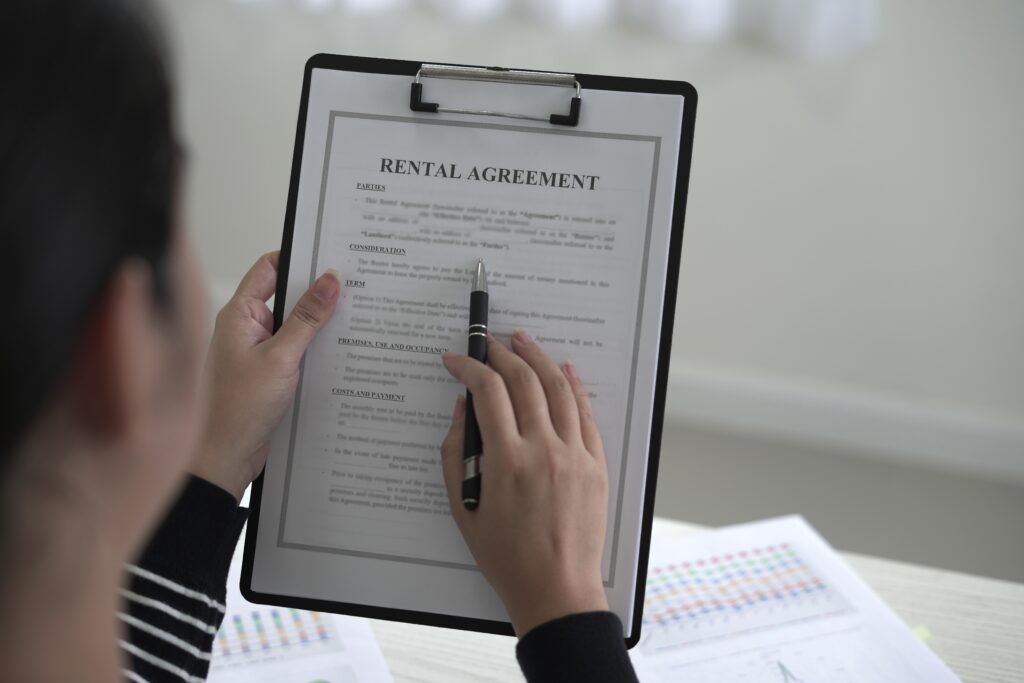
Often, yes. But it depends on the landlord.
Some landlords accept an offer letter as proof of income. Others want at least one or two pay stubs. Some may accept an offer letter only if it includes enough detail. Others may require extra proof, like savings, bank statements, or a co-signer.
A strong offer letter should ideally include:
- Your name
- Employer name
- Job title
- Start date
- Salary or hourly rate
- Expected weekly hours
- Whether the role is full time, part time, temporary, or contract
- Employer contact information
- Signature or official company format
If your offer letter only says “Congratulations, you’ve been hired,” it may not be enough. The landlord needs to understand your income.
If the letter doesn’t include pay details, ask your employer or HR department whether they can provide a more complete employment verification letter.
What If You Haven’t Started Yet?
If your new job hasn’t started yet, you may still be able to apply. But you’ll likely need to show that the job is real and that you can cover costs before paychecks begin.
Helpful documents may include:
- Signed offer letter
- Employment verification letter
- Start date confirmation
- Salary or hourly pay information
- Savings account statement
- Bank statements showing available funds
- Prior pay stubs from your old job
- Rental references
- Proof of on-time rent payments
- Co-signer information, if needed
If there’s a gap before your first paycheck, savings may matter. A landlord may feel more comfortable if you can show you have enough money for the security deposit, first month’s rent, utilities, and basic expenses while you wait for income to start.
You can explain it simply:
“I start my new full-time job on [date]. I’ve included my signed offer letter, salary details, and proof of savings to cover move-in costs before my first paycheck.”
That’s clear and practical.
What If You Just Started and Only Have One Pay Stub?
One pay stub may be enough for some landlords, but not all.
If you only have one pay stub, include other documents that support the income.
You may want to provide:
- Offer letter
- Employment verification
- One pay stub
- Bank statements showing the deposit
- Prior pay stubs from previous employment
- Proof of savings
- Rental references
A landlord may be more comfortable if all the documents tell the same story. If the offer letter says you earn $60,000 per year and your first pay stub matches that, the application may feel stronger.
If your first paycheck is lower because it only covered part of a pay period, explain that briefly.
For example:
“My first pay stub only reflects a partial pay period because I started mid-cycle. I’ve included my offer letter showing my regular salary.”
That helps avoid confusion.
What If Your Income Is Hourly or Variable?
If your new job is hourly, commission-based, tipped, seasonal, or variable, the landlord may want more detail.
A salary is easy to calculate. Variable income takes more explanation.
If your income is hourly, provide:
- Hourly wage
- Expected weekly hours
- Whether overtime is guaranteed or optional
- Employment verification
- Pay stubs, if available
If your income includes tips, commission, or bonuses, ask how the landlord counts that income.
You can ask:
“Do you count commission or tip income, and what documents do you need to verify it?”
If the income is variable, don’t rely on your best possible month. Landlords may look for income that seems consistent enough to support rent. You may need savings, a co-signer, or a lower-rent apartment if the income is hard to verify.
What If You’re Relocating for a New Job?
Relocating for a job can make the rental process more complicated because you may not have local references, local income history, or time to tour many apartments.
Before applying, prepare a relocation renter packet.
That may include:
- Signed offer letter
- Start date
- Salary or hourly rate
- Employer contact information
- Proof of savings
- Current landlord reference
- Proof of on-time rent payments
- Prior pay stubs
- Photo ID
- Short relocation explanation
You can include a short note:
“I’m relocating for a new job starting on [date]. I’ve included my offer letter, salary information, proof of savings, and current landlord reference.”
If you can’t tour in person, be careful. Ask for a live video tour, verify the landlord or property manager, and avoid sending money before you’re confident the listing is legitimate.
Job relocation can create urgency, and scammers know that. Don’t let pressure push you into paying for a rental you haven’t verified.
What If You Have Bad Credit and a New Job?
A new job can help your application, but it may not erase bad credit.
If your credit report has missed payments, collections, rental debt, charge-offs, or other negative items, the landlord may still have concerns. But stable new income can be an important part of the full picture.
If you have bad credit and a new job, gather documents that show your current situation is stronger now.
That may include:
- Offer letter
- Pay stubs, if available
- Employment verification
- Proof of savings
- Rental references
- Proof of on-time rent payments
- Paid or settled debt letters
- Dispute confirmations for inaccurate information
- Short credit explanation letter
- Co-signer information, if available
A short explanation might sound like:
“My credit was affected by a past hardship, but I recently started a full-time job with stable income. I’ve included my offer letter, proof of savings, and rental references to support my application.”
That gives context without oversharing.
What If You Have No Credit and a New Job?
No credit plus a new job can feel like a thin application, especially if you’re also a first-time renter.
That doesn’t mean you can’t rent. It means you need to prove stability in other ways.
Helpful documents may include:
- Signed offer letter
- Employment verification
- Proof of savings
- Bank statements, if you’re comfortable sharing them
- Rental references, if available
- Personal or professional references
- Co-signer or guarantor information
- Proof of on-time utility or phone payments
You can say:
“I don’t have much credit history yet, but I have a new full-time job starting on [date] and savings for move-in costs. I can provide my offer letter, employment verification, and references.”
No credit is usually easier to explain than bad credit, but the landlord still needs proof that you can afford the rent.
What If the Landlord Wants Recent Pay Stubs?
Some landlords have strict rules. They may require recent pay stubs and refuse to accept an offer letter.
That’s frustrating, but it’s better to find out before paying an application fee.
Ask:
- “Do you accept offer letters, or do you require pay stubs?”
- “How many pay stubs do you need?”
- “Can I provide employment verification instead?”
- “Would proof of savings help?”
- “Would a co-signer help until I have more pay history?”
- “Do you review applications case by case?”
If the landlord won’t accept your documents and you don’t have pay stubs yet, applying may be a waste of money.
You may need to look for a landlord who reviews applications manually or wait until you have your first full pay stub.
Ask About Income Requirements Before Applying
Many landlords require income to be 2.5x or 3x the rent. If you’re starting a new job, ask how they calculate your income.
Before paying an application fee, ask:
- “What income do you require?”
- “Do you use gross income or take-home pay?”
- “Do you accept offer letters?”
- “Do you count income from a job that starts soon?”
- “Do you require pay stubs after the job begins?”
- “Can a co-signer help if my start date is after move-in?”
- “Do you accept proof of savings?”
- “Are there any automatic denial factors I should know about?”
If your new income meets the requirement but your documents are limited, ask what they need before applying.
Don’t assume the landlord will count the offer letter the same way you do.
Use Savings to Strengthen the Application
Savings can help when your job is new because it shows you have a cushion.
A landlord may feel more comfortable if you can show that you have money available for:
- Security deposit
- First month’s rent
- Utilities
- Moving costs
- Emergency expenses
- The gap before your first paycheck
Bank statements can help prove savings, but share carefully. You may be able to redact private transactions while leaving your name, bank name, statement date, and balance visible.
Ask:
“Can I provide proof of savings, and am I allowed to redact private transactions that aren’t relevant?”
Never share online banking passwords with a landlord.
Can a Co-Signer Help With a New Job?
A co-signer may help if your new job looks promising but your income history is limited.
A co-signer may be useful if:
- You haven’t started the job yet.
- You don’t have pay stubs.
- Your credit is thin or damaged.
- Your income is close to the requirement.
- The landlord wants extra assurance.
- You’re relocating and don’t have local rental history.
But a co-signer isn’t a small favor. They may be responsible if you don’t pay rent or meet the lease terms.
Before asking someone to co-sign, ask the landlord:
- “Do you accept co-signers?”
- “Would a co-signer help with a new job situation?”
- “What does the co-signer need to qualify?”
- “Will the co-signer’s credit be checked?”
- “What exactly is the co-signer responsible for?”
- “Can the co-signer be removed later?”
If the landlord doesn’t accept co-signers, you’ll need a different strategy.
Watch Out for New-Job Rental Scams
If you’re moving quickly for a new job, be careful.
Scammers may target renters who are relocating, under pressure, or applying from out of town.
Red flags include:
- The rent is much lower than similar listings.
- The landlord won’t show the unit.
- They won’t do a live video tour.
- They ask for money before you see the lease.
- They pressure you to pay immediately.
- They ask for gift cards, wire transfers, crypto, or unusual payment methods.
- They claim to be out of town and can’t meet.
- They won’t verify ownership or management.
- The listing photos appear on multiple unrelated listings.
- They won’t answer basic questions.
A new job can make you feel rushed. But don’t send money or sensitive documents until you’ve verified the rental.
What If You’re Denied?
If you’re denied because of information in a tenant screening report, credit report, or other consumer report, you may be entitled to an adverse action notice.
That notice should tell you which company provided the report, how to request a free copy, and how to dispute inaccurate information.
If the denial was based on income documentation, ask what didn’t meet the requirement.
You can ask:
- “Was the denial based on income verification?”
- “Was my offer letter not accepted?”
- “Would pay stubs have changed the decision?”
- “Was a tenant screening report used?”
- “Can you send the adverse action notice if a report was used?”
- “What documents would be required to qualify in the future?”
Even if that apartment doesn’t work out, the answer can help you apply smarter next time.
Sample Message to a Landlord
Here’s a simple message you can send before applying:
Hi [Landlord or Property Manager Name],
I’m interested in applying for [unit/address]. I recently accepted a new job starting on [date], and I wanted to ask what documents you accept for income verification before I pay the application fee. I can provide my signed offer letter, salary details, employment verification, proof of savings, and pay stubs once available.
Do you accept offer letters for applicants with a new job, or do you require recent pay stubs?
Thank you. I just want to make sure I provide the right documents before applying.
This message is polite, direct, and practical.
Quick Checklist for Renting With a New Job
Before applying, try to have:
- Signed offer letter
- Employment verification letter
- Start date
- Salary or hourly rate
- Expected weekly hours
- Employer contact information
- First pay stub, if available
- Prior pay stubs, if useful
- Proof of savings
- Bank statements, if needed
- Rental references
- Proof of on-time rent payments
- Co-signer information, if needed
- Short explanation letter, if your situation needs context
Before paying an application fee, ask:
- Does the landlord accept offer letters?
- Are pay stubs required?
- How many pay stubs are needed?
- Is income based on gross or net pay?
- Does the job need to start before move-in?
- Can savings help?
- Can a co-signer help?
- Are there any automatic denial factors?
Preparation can help turn a new job from a question mark into one of the strongest parts of your application.
The Bottom Line
You can rent with a new job, but you may need extra documentation.
If you don’t have recent pay stubs yet, a signed offer letter, employment verification, proof of savings, prior pay stubs, rental references, and a co-signer may help strengthen your application.
Before paying an application fee, ask whether the landlord accepts offer letters and how they verify new income. If they require pay stubs you don’t have yet, you may want to apply elsewhere or wait until your first paycheck arrives.
The goal is to show that your income is real, your job is confirmed, and the rent fits your new situation.
Renters.help is built for people trying to understand what may be getting in the way of rental approval, especially when new income, credit, tenant screening, application documents, or denials get confusing.
Starting a new job and worried about getting approved for an apartment? Renters.help can help you understand what documents landlords may want before you apply.