

Rent Affordability Calculator
Use the Renters.help Rent Affordability Calculator to see how much rent fits your budget before your next apartment application.
— Free Tools & Calculators
— Rent Affordability
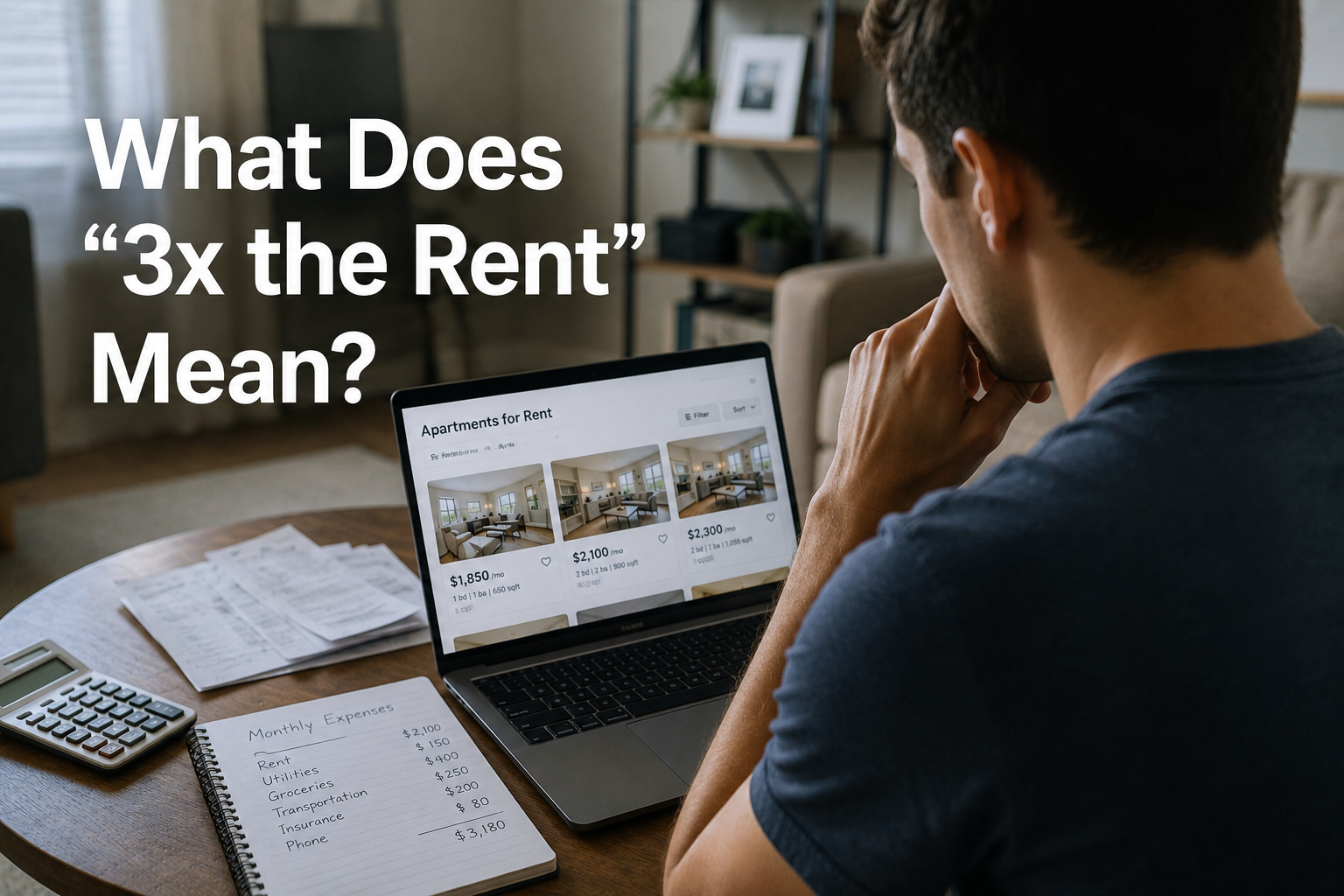
Rent Affordability Calculator: How Much Rent Can I Afford?
Rent can look affordable in a listing and still feel completely different once you add the rest of real life.
The apartment may be $1,500 a month, but what about utilities? Parking? Pet rent? Internet? Car insurance? Credit card payments? Student loans? Groceries? Moving costs? And if you’re applying with bad credit, no credit, or a recent denial, you may also need to think about application fees, deposits, co-signers, or extra documentation.
That’s why “How much rent can I afford?” isn’t always as simple as plugging your income into one rule.
The Renters.help Rent Affordability Calculator is built to help you see exactly how much rent fits your budget– based on your income, debts, and your state’s cost of living.
It’s not just about what rent amount looks possible on paper. It’s about finding a rent target that makes sense before you apply, before you pay another application fee, and before you sign a lease that may stretch your budget too far.
How Much Rent Can I Afford?
A common rule of thumb says your housing costs should stay around 30% of your monthly income. That rule can be a helpful starting point, but it doesn’t tell the whole story.
Why? Because your budget is personal.
Two renters can earn the same income and have completely different financial lives. One person may have no debt, no car payment, and low transportation costs. Another may have credit card payments, student loans, medical bills, childcare, or higher insurance costs. The same rent amount may feel comfortable for one renter and risky for another.
That’s why rent affordability should look at more than income alone.
When deciding how much rent you can afford, think about:
- Monthly income
- Debt payments
- Utilities
- Transportation
- Groceries
- Insurance
- Credit card minimums
- Student loans
- Car payments
- Childcare or family support
- Savings
- Emergency expenses
- Cost of living in your state
- Total move-in costs
The rent itself is only one piece of the monthly cost.
A $1,400 apartment may really cost closer to $1,700 once you add electricity, internet, trash, parking, and renters insurance. A $1,700 apartment may feel manageable in one state but much harder in another if groceries, transportation, gas, insurance, and utilities are higher.
The Renters.help calculator is designed to help you see a more realistic rent range before you apply.
Why the 30% Rule Is Only a Starting Point
The 30% rule is popular because it’s simple. If you earn $4,000 per month, 30% of that is $1,200. So a basic rent target might be around $1,200.
But real budgets are rarely that clean.
For example, say two renters both earn $4,000 per month.
Renter A has:
- No car payment
- No credit card debt
- Low utilities
- A short commute
- Some emergency savings
Renter B has:
- $450 car payment
- $220 student loan payment
- $175 credit card minimums
- Higher gas costs
- No emergency savings
A $1,200 rent payment may be comfortable for Renter A and stressful for Renter B.
That’s why the calculator looks beyond a simple income percentage. Income matters, but so do debts and cost of living.
A rent amount that gets you approved isn’t always the same as a rent amount you can comfortably afford.
How the Renters.help Rent Affordability Calculator Works
The Renters.help Rent Affordability Calculator helps estimate a rent range based on the information you enter.
The calculator is designed to consider:
- Your income
- Your monthly debt payments
- Your state’s cost of living
- A realistic rent target
- How much room you may have in your budget
The main output is simple:
See exactly how much rent fits your budget– based on income, debts, and your state’s cost of living.
That matters because a generic rent calculator may only ask for income. But renters don’t live on income alone. They live on what’s left after bills, debt payments, transportation, food, and everyday costs.
If you’re trying to rent with bad credit, limited credit, no credit, or a recent denial, the calculator can help you avoid applying for apartments that may be too expensive for your application profile.
It can also help you answer questions like:
- What rent range should I search for?
- Am I aiming too high?
- Would a lower rent improve my approval chances?
- How much do my debts affect what I can afford?
- How does my state’s cost of living change the picture?
- Should I look for a roommate?
- Should I wait, save more, or apply for a cheaper unit?
The goal isn’t to scare you away from renting. The goal is to help you apply smarter.
What Information You’ll Need
Before using the calculator, it helps to have a few numbers ready.
You may want to gather:
- Monthly income before taxes
- Monthly take-home pay, if you know it
- Credit card minimum payments
- Student loan payments
- Car payment
- Personal loan payments
- Other monthly debt payments
- Your state
- Expected utility costs, if known
- Any major monthly expenses that affect your budget
You don’t need a perfect budget to get started. A good estimate is still better than guessing.
But try to be honest. If your debt payments are $600 a month, don’t ignore them. If utilities are high in your area, don’t pretend they’ll be zero. If groceries, gas, or insurance are expensive where you live, that matters.
A rent calculator is only as useful as the numbers you put into it.
Why Debt Payments Matter
Landlords often focus on income. They may ask whether you earn 2.5x or 3x the rent. That can be helpful for screening, but it doesn’t always show what you can actually afford.
Debt payments can change the budget fast.
For example, if you earn $4,500 per month and rent is $1,500, you may technically meet a 3x rent rule. But if you also owe $700 a month in debt payments, your budget may feel much tighter than the income rule suggests.
Debt payments may include:
- Credit card minimums
- Student loans
- Auto loans
- Personal loans
- Buy now, pay later payments
- Medical payment plans
- Past-due payment arrangements
- Child support or other required payments
The calculator helps account for those obligations because they affect how much money is left for rent.
This is especially important if you’re rebuilding credit. You may be trying to pay down balances, catch up on accounts, or avoid falling behind again. Choosing a rent amount that leaves room for those payments can help protect your progress.
Why Your State’s Cost of Living Matters
Rent affordability depends partly on where you live.
A rent amount that feels manageable in one state may feel completely different in another. Utilities, insurance, transportation, groceries, taxes, and everyday expenses can vary a lot by location.
That’s why the Renters.help calculator includes your state’s cost of living as part of the estimate.
This can help renters avoid a common mistake: comparing rent numbers without comparing the rest of the budget.
For example:
- A lower-rent state may still feel expensive if wages are low.
- A higher-rent state may be manageable if your income is higher.
- A car-dependent area may increase transportation costs.
- A city with strong public transportation may reduce car expenses.
- Utility costs may change depending on climate and housing type.
Rent doesn’t exist by itself. It sits inside the rest of your budget.
Using your state helps make the calculator more realistic than a one-size-fits-all rule.
Common Budgeting Mistakes Renters Make
A lot of renters don’t get in trouble because they ignored rent completely. They get in trouble because they forgot the extra costs around rent.
Here are some common budgeting mistakes to avoid.
Only looking at the listed rent
The listed rent may not include utilities, parking, trash, internet, pet rent, renters insurance, or building fees.
Before applying, ask:
“What’s the total monthly cost, including required fees?”
Forgetting move-in costs
Move-in costs can be expensive. You may need first month’s rent, a security deposit, application fees, utility setup fees, pet fees, moving costs, and renters insurance.
Even if the monthly rent works, the upfront cost may be too much.
Using gross income as if it were take-home pay
Gross income is what you earn before taxes and deductions. Take-home pay is what actually lands in your bank account.
A landlord may use gross income to qualify you, but your real budget runs on take-home pay.
Ignoring debt payments
Debt payments reduce what you can comfortably spend on rent. A rent amount may look fine until you add credit card minimums, student loans, car payments, or personal loans.
Assuming utilities will be low
Utilities vary by state, city, building age, unit size, season, and whether the apartment uses gas, electric, or both.
If utilities aren’t included, ask for an estimate.
Spending every available dollar on rent
If rent leaves you with no room for emergencies, the apartment may be too expensive.
A safer rent target leaves space for unexpected costs.
Applying before checking the numbers
Application fees can add up quickly. Use the calculator before paying fees so you know whether the rent fits your budget.
How to Use Your Calculator Results
Once you get your rent estimate, use it as a decision tool.
The calculator result can help you set three numbers:
1. Comfortable rent
This is the rent amount that gives you room to pay bills, cover daily expenses, and keep some breathing room.
This is the number to build your search around.
2. Stretch rent
This is the highest rent you might be able to manage if everything goes right.
Be careful with this number. It may work on paper but feel tight in real life.
3. Walk-away rent
This is the amount that’s too risky, even if the apartment looks perfect.
Knowing this number before you tour can help you avoid talking yourself into a lease that doesn’t fit.
The calculator result should guide your apartment search, not just satisfy curiosity.
Use it to decide:
- Which listings to save
- Which listings to skip
- Whether to consider roommates
- Whether to ask about lower-rent units
- Whether to wait and save more
- Whether to reduce debt before applying
- Whether to use a co-signer
- Whether to adjust your target neighborhood
The result gives you a clearer starting point.
How Rent Affordability Affects Approval
Rent affordability doesn’t just affect your monthly stress. It can affect your rental application too.
Landlords often want to see that your income is high enough for the rent. Some use a 2.5x or 3x rent rule. Others review income case by case.
If your rent target is too high compared with your income, approval may be harder.
That can matter even more if you have:
- Bad credit
- No credit
- Limited credit history
- Collections
- Rental debt
- A recent denial
- Irregular income
- A new job
- Self-employment income
A lower rent can sometimes make your application stronger because your income looks more stable compared with the monthly payment.
For example, if your credit score is low but the rent is clearly affordable, a landlord may be more willing to consider your proof of income, rental references, and explanation letter.
A realistic rent target can help you apply where you have a better chance.
What If the Calculator Says You Can Afford Less Than You Expected?
This can feel disappointing, but it’s useful information.
If the calculator suggests a lower rent range than you hoped, don’t treat it like failure. Treat it like a warning before you spend money on applications or sign a lease that may be hard to keep.
You may want to:
- Search in a less expensive area
- Consider a roommate
- Look for a smaller unit
- Look for older buildings instead of luxury apartments
- Ask whether utilities are included
- Reduce debt payments before applying
- Build savings for move-in costs
- Wait until income increases
- Consider private landlords with flexible screening
- Avoid apartments that would leave no emergency cushion
A lower rent target may not be exciting, but it can protect you from late payments, debt, eviction risk, and future credit damage.
The right rent isn’t always the highest rent you can technically qualify for. It’s the rent you can keep paying.
What If the Calculator Says You Can Afford More?
That can be encouraging, but don’t automatically spend up to the maximum.
If the calculator gives you a higher rent range, still think carefully about your future plans.
Ask yourself:
- Do I have an emergency fund?
- Will utilities be higher than expected?
- Could my income change?
- Do I have upcoming debt payments?
- Am I planning to buy a car, go back to school, or support family?
- Will this rent make it harder to rebuild credit?
- Will I still have money left after move-in costs?
A calculator can help estimate affordability, but it can’t know every future expense.
Use the result as guidance, not permission to spend every dollar.
Rent Affordability and Bad Credit
If you have bad credit, rent affordability becomes even more important.
A landlord may already have concerns about missed payments, collections, high balances, or past-due accounts. If the rent also looks too high for your income, that concern may grow.
A realistic rent target can help you show:
- You’re applying within your means.
- Your income supports the rent.
- You have room for utilities and other bills.
- You’re less likely to fall behind.
- You’re taking the application seriously.
If your credit isn’t perfect, prepare a renter packet with:
- Proof of income
- Employment verification
- Proof of savings
- Rental references
- Proof of on-time rent payments
- Credit explanation letter
- Proof that old debts were paid or settled
- Dispute confirmations, if needed
- Co-signer information, if available
The calculator can help you choose a rent amount that makes those documents more convincing.
Rent Affordability and No Credit
If you have no credit, the landlord may rely more heavily on income, savings, and documentation.
That makes affordability important.
If your rent target is clearly supported by your income, your application may feel less risky even without much credit history.
If you don’t have credit, gather documents like:
- Pay stubs
- Job offer letter
- Employment verification
- Bank statements, if you’re comfortable sharing them
- Proof of savings
- Rental references
- Utility payment history
- Co-signer information, if needed
The calculator can help you find a rent range that fits your income before a landlord reviews your application.
Rent Affordability and Application Fees
Application fees can add up quickly, especially if you’re applying to apartments that are out of reach.
Before paying a fee, use the calculator to ask:
- Does this rent fit my budget?
- Does this rent fit my income?
- Would I meet a 2.5x or 3x rent rule?
- Would utilities push this over my limit?
- Do I have enough for move-in costs?
- Is this worth applying for?
Then ask the landlord:
- “What income do you require?”
- “Do you use gross income or take-home income?”
- “Are utilities included?”
- “What’s the total amount due before move-in?”
- “Are there any required monthly fees?”
- “Is the application fee refundable in any situation?”
Don’t pay blindly if the rent doesn’t fit.
Questions to Ask Before Applying
Once you know your rent range, ask better questions before applying.
Try:
- “What is the total monthly cost, including required fees?”
- “Which utilities are included?”
- “What utilities would I pay separately?”
- “What’s the average utility cost for this unit?”
- “Do you require renters insurance?”
- “Is parking included?”
- “Is there pet rent?”
- “What’s the total move-in cost?”
- “Do you require income to be 2.5x or 3x the rent?”
- “Do you accept co-signers?”
- “Do you review applications case by case?”
- “Are there any automatic denial factors?”
The calculator helps you understand your side of the budget. These questions help you understand the landlord’s side.
You need both before applying.
Quick Checklist: Before You Decide a Rent Amount
Before choosing your rent target, make sure you know:
- Your monthly income
- Your take-home pay
- Your monthly debt payments
- Your estimated utilities
- Your transportation costs
- Your grocery budget
- Your insurance costs
- Your total move-in cost
- Your state’s cost of living
- Your emergency savings
- The landlord’s income requirement
- Whether you may need a co-signer
- Whether your credit may affect approval
- Whether the rent leaves breathing room
If you don’t know these numbers yet, start with the calculator.
How the Calculator Helps You Apply Smarter
The Renters.help Rent Affordability Calculator isn’t just about finding a number. It’s about making better rental decisions.
It can help you:
- Set a realistic rent range
- Avoid apartments that stretch your budget too far
- Compare rent against income and debt
- Factor in state cost of living
- Prepare before paying application fees
- Understand whether a rent amount may support approval
- Decide whether to look for a roommate
- Decide whether to save more before moving
- Avoid signing a lease that could lead to late payments later
For renters with bad credit, no credit, or a recent denial, that kind of planning can matter a lot.
You may not be able to control every landlord’s screening process. But you can control whether you apply with a realistic budget, organized documents, and a clearer plan.
The Bottom Line
So, how much rent can you afford?
Start with income, but don’t stop there. A real rent budget should also include debt payments, utilities, move-in costs, state cost of living, savings, and the everyday expenses that don’t disappear after you sign a lease.
The 30% rule can be a helpful benchmark, but it’s not personal enough for every renter. A landlord’s 3x rent rule can help determine approval, but it doesn’t always tell you whether the apartment fits your real budget.
That’s why the Renters.help Rent Affordability Calculator is useful. It helps you see exactly how much rent fits your budget based on income, debts, and your state’s cost of living.
Use the result before you apply, before you pay fees, and before you fall in love with a place that may stretch your budget too far.
The goal isn’t just to get approved. It’s to move into a place you can actually afford to keep.
Renters.help is built for people trying to understand what may be getting in the way of rental approval, especially when affordability, credit, income, tenant screening, application fees, or denials get confusing.
Use the Renters.help Rent Affordability Calculator to see how much rent fits your budget before your next apartment application.